
China's Automotive Chipmakers Enter Robotics: What Are Customers Actually Buying?
A robotics team evaluating a new computing platform needs to know what it can start building with today. A processor specification is only part of the answer. Development hardware, software support and the work required to integrate sensors and motor control can determine whether a project gets moving.
Two September 2026 announcements from Chinese automotive chip suppliers illustrate different starting points. Black Sesame Technologies said on September 4 that the first batch of Aura Devkit development kits purchased by collaborative robot maker AUBO had been fully delivered in July. On September 10, SemiDrive outlined a robotics portfolio spanning R1, D9 and E3-R, from task planning to joint control.
For engineers and buyers outside China, these disclosures offer a useful way to assess the suppliers: examine what is being delivered, the development tasks it supports, and the customer progress that has actually been reported.
Aura gives a named customer a development platform
Black Sesame's announcement identifies the customer, the product and the delivery milestone. AUBO purchased Aura Devkits for collaborative robot development, with technical support accompanying the hardware.
Aura is a computing module within the SesameX platform. Product material published in June lists 70 TOPS of NPU performance at INT8 precision, multiple video inputs, synchronized IMU data acquisition, and interfaces including TSN networking and CAN. The September announcement again identifies applications such as legged robots and collaborative arms.
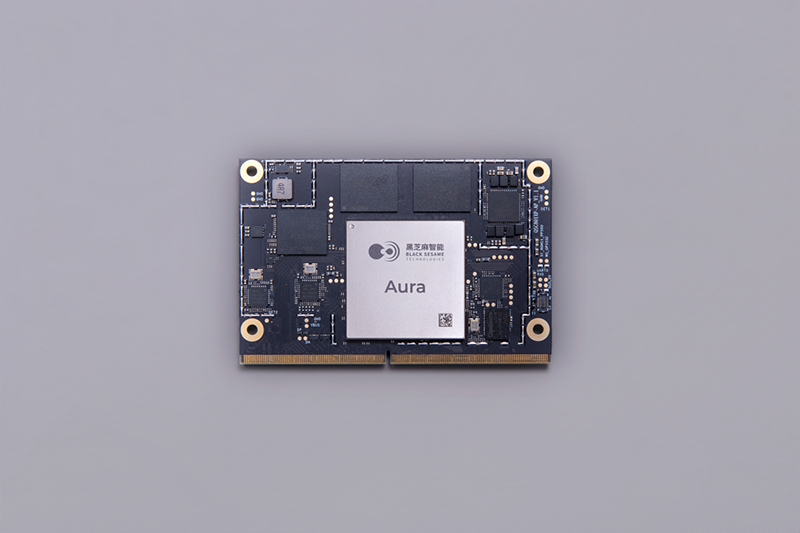
Figure 1. Aura computing module, from Black Sesame Technologies' September 4, 2026 announcement. The photograph shows the module; the announced delivery concerned Aura Devkit development kits.
In a robotic picking application, vision identifies an object, pose data contributes to the decision, and the result passes to the motion-control system. Fast image processing is useful only when data from different sources can be aligned in time and commands reach the next stage as required.
The module and kit provide a hardware starting point. Technical support can help with integration and adaptation. The stated 70 TOPS does not establish picking success rates, however, and delivery of development kits does not establish volume shipments of complete robots. The commercial significance is that a named robotics customer has purchased the platform for product development.
The next procurement questions concern the package around the hardware: which drivers and interface examples are included, which algorithms the customer must deploy, and who assists with debugging. The announcement establishes a supply and support relationship; the software deliverables and service scope still belong in the project agreement.
SemiDrive divides the work across computing and control
SemiDrive's recent material emphasizes chips for different levels of a robot's architecture. The R1 family serves the computational "brain," handling model inference and task planning. D9 serves the "cerebellum," or motion-control layer. E3-R microcontrollers extend toward the joints and torso for motor control and sensor acquisition.
These labels describe engineering responsibilities. They are not interchangeable measures of intelligence or compute performance.
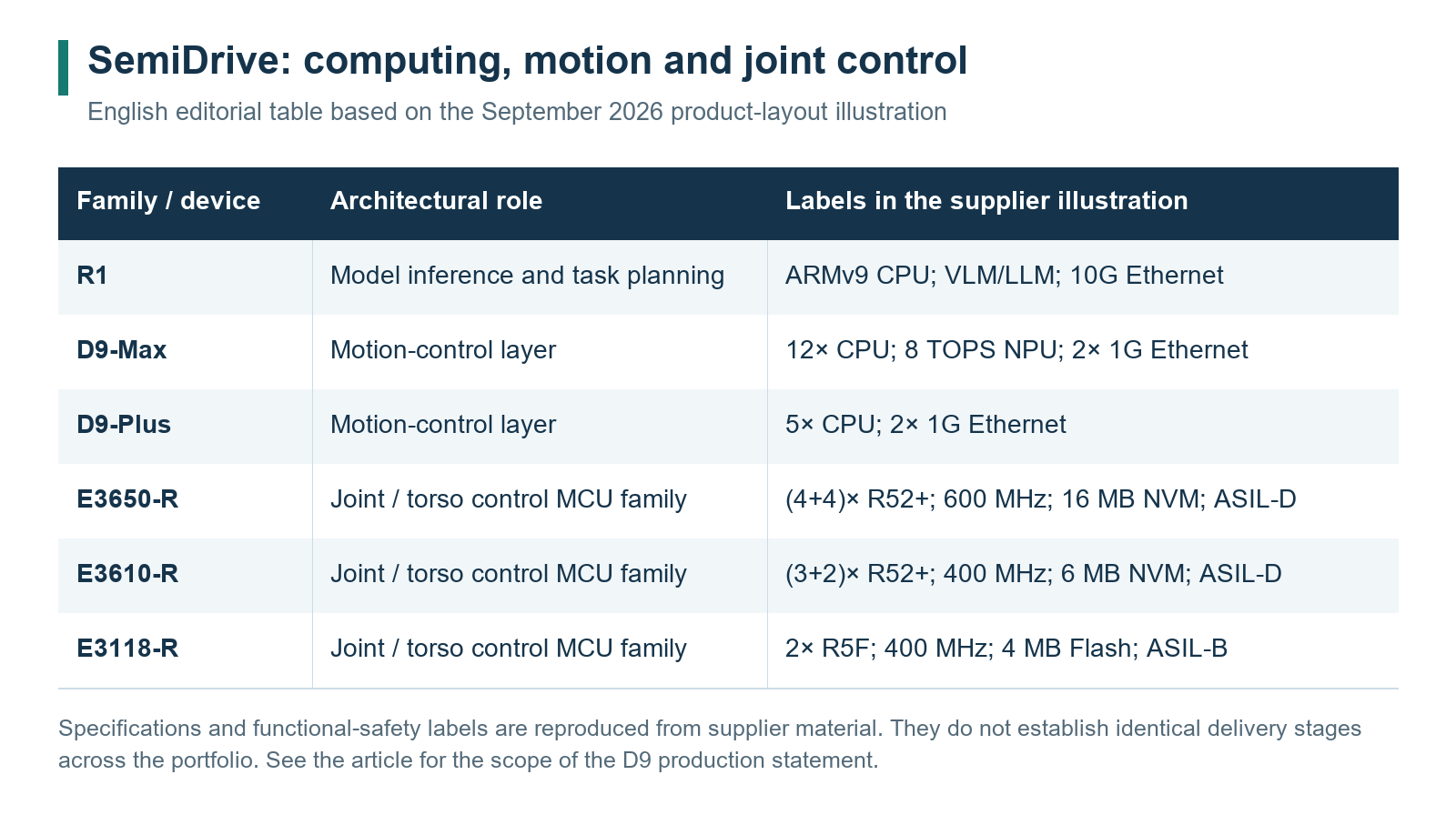
Figure 2. An English editorial table based on SemiDrive's September 2026 product-layout illustration. Product roles and specifications are supplier disclosures; the table does not imply that every device has reached the same shipment stage.
The current D9 solution page describes placing motion control and communications or interaction functions in separate domains on the same chip. The purpose is to limit interference between tasks while the robot processes information and continues to move.
Closer to the motors, the E3118-R joint-control solution provides three-phase PWM outputs and synchronized sampling. Driving a motor and handling its feedback are different jobs from running a planning model. Putting all these products into a single TOPS ranking would obscure the requirements they address.
SemiDrive also states on its current D9 page that D9-Plus and D9-Max have entered mass production at humanoid robot manufacturers. The page does not name those customers or disclose quantities. This should remain an attributed company statement about D9, rather than a shipment claim for the entire robotics portfolio.
Compare the integration work, as well as the silicon
With Aura, a customer can begin with an existing module and development kit, then adapt algorithms, sensors and the control system. With SemiDrive's portfolio, a customer can select chips for the required architectural layers and undertake board design and system integration. Black Sesame's recent disclosure centers on a named development-kit purchase; SemiDrive describes a more detailed division of chip functions and reports customer production progress for D9.
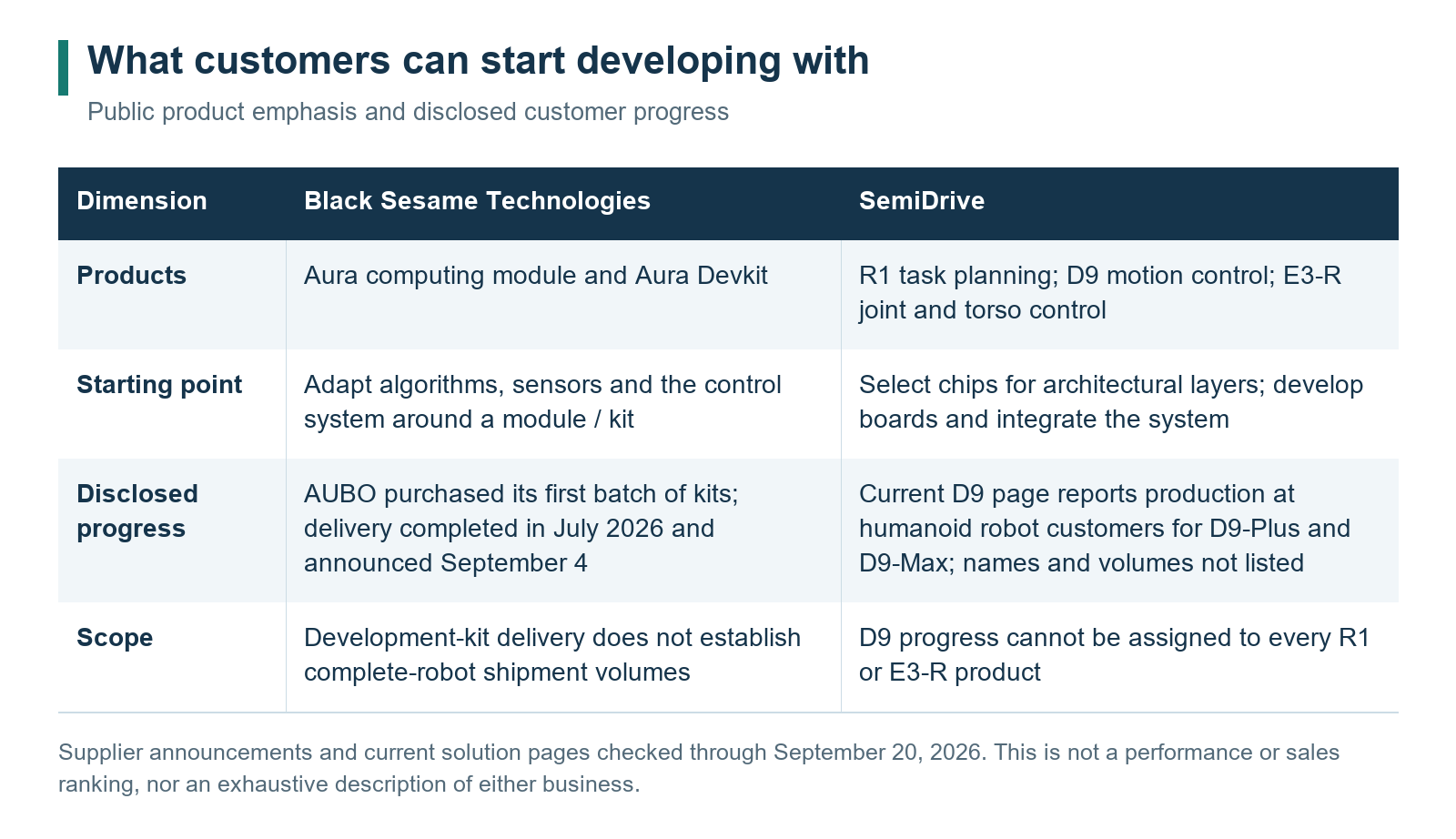
Figure 3. Comparison of public product and delivery emphasis, based on recent supplier announcements and current solution pages checked through September 20, 2026. It is not a performance or sales ranking.
These are the emphases of the material reviewed, not exclusive descriptions of either company's business model. Both suppliers may offer other forms of delivery.
A team with mature joint-control boards may first evaluate an upper-level computing platform when adding vision or task planning. A team redesigning the control system has to consider processors, real-time control and communications together. A broader portfolio gives that team more options without requiring every existing device to be replaced.
SemiDrive also emphasizes a common toolchain, SDKs and technical support. Their value must be established in the project: how readily existing motors and sensors can be connected, whether interfaces remain stable after software updates, and how quickly timing faults can be traced. Fewer supplier boundaries may reduce coordination work, but software versions and support commitments still need to be specified.
Procurement comparisons should include development boards, software licensing, technical services and ongoing maintenance. The unit price of a chip alone cannot capture the cost of putting a functioning system into a robot.
The available disclosures do not support a cost or performance ranking under a common workload. That would require aligned models, sensor inputs, control periods and thermal conditions, followed by testing of task performance and sustained operation.
Automotive experience still needs robot-level validation
Both companies draw on their automotive experience in real-time computing, hardware and software integration, and supply. A collaborative arm, quadruped or humanoid can have very different loads, joint counts, sensors and motion tasks. Its validation requirements change accordingly.
For a collaborative arm, completing one unloaded pick is different from running continuously with a real workpiece. Engineers need to test whether control timing remains stable as vision-processing load rises, how the system handles communications delay, and how it stops or recovers after a fault.
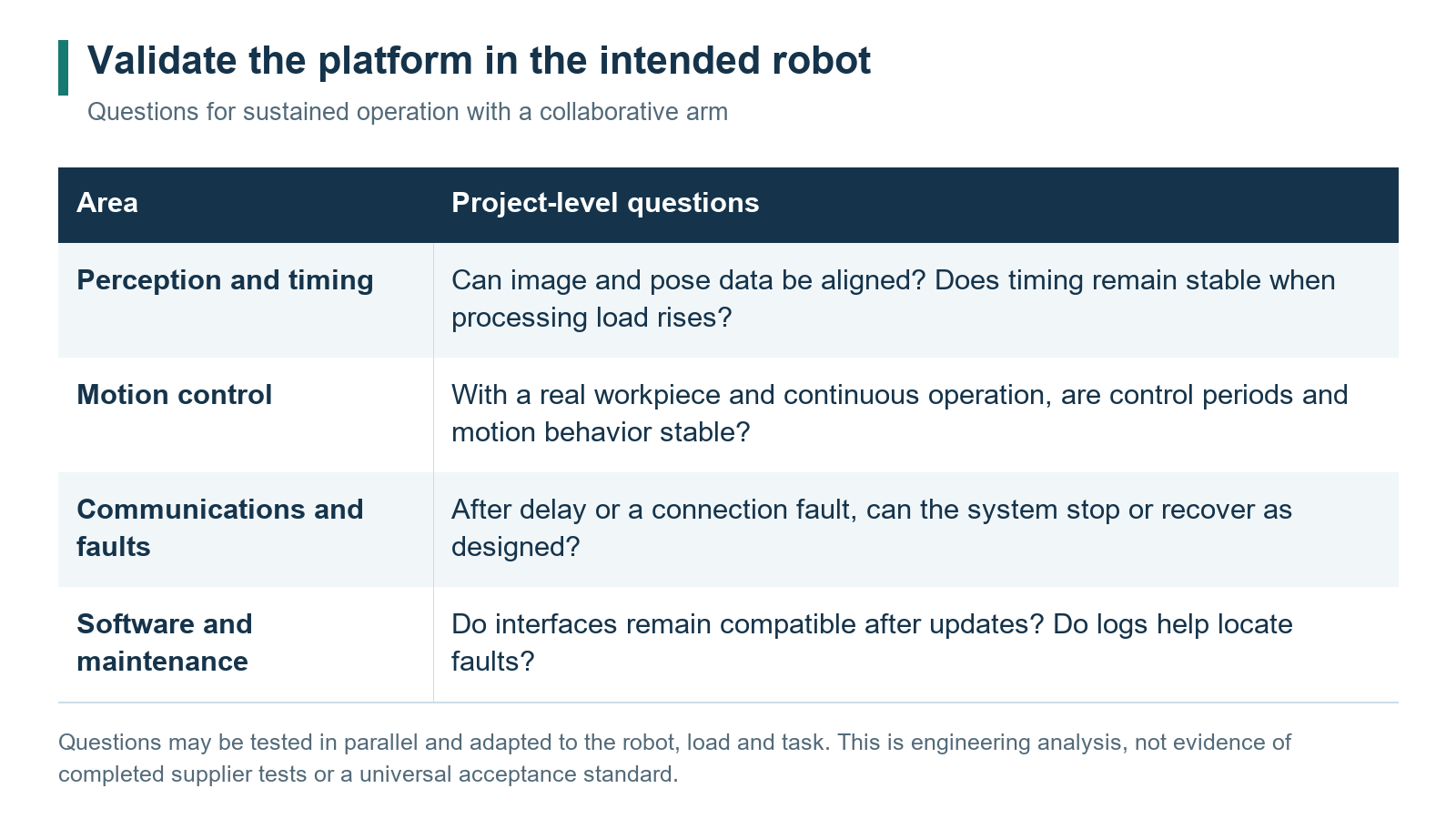
Figure 4. Illustrative project-validation questions. They do not indicate that the suppliers or customers discussed have completed these tests, and they are not a universal acceptance standard.
Future evidence worth watching includes adoption in named robot models, repeat purchases, sustained shipments and operating results that can be examined. Automotive success helps explain why these suppliers have entered robotics. Delivery records from robotics projects will show how far the new businesses have progressed.
Customers can already evaluate computing modules, development kits and chips for different control layers, together with associated software and support. The suppliers most likely to stay in a design will be those that help teams get the system working sooner and keep it stable under the intended tasks.