
From the 48V bus to the GPU: Chipown and Oriental Semiconductor map out server power
Server power designers evaluating Chinese suppliers now have more specific devices to examine. On September 2, 2026, Chipown presented a layered power architecture at ODCC. A day earlier, Oriental Semiconductor announced its white paper on computing-server power systems. Both described product coverage extending toward the GPU.
For engineering and sourcing teams, that coverage becomes useful when it is mapped to individual conversion and protection stages. The bus converter, branch protection and GPU voltage regulator have different jobs, and a complete design depends on how their components work together.
Bus conversion pairs a controller with a power stage
One staged architecture uses an intermediate bus converter, or IBC, to convert 48V to 12V or 6V. A regulator near the processor then supplies the low core voltage. The choice of architecture depends on the platform.
Chipown placed PN6867 and PN6869 in the bus-conversion stage of its September presentation. Its May application material identifies PN6869 as an open-loop LLC/DCX controller for fixed-ratio conversion, including 48V to 12V or 6V. The controller manages switching timing; external MOSFETs, drivers and magnetic components carry out the power conversion.
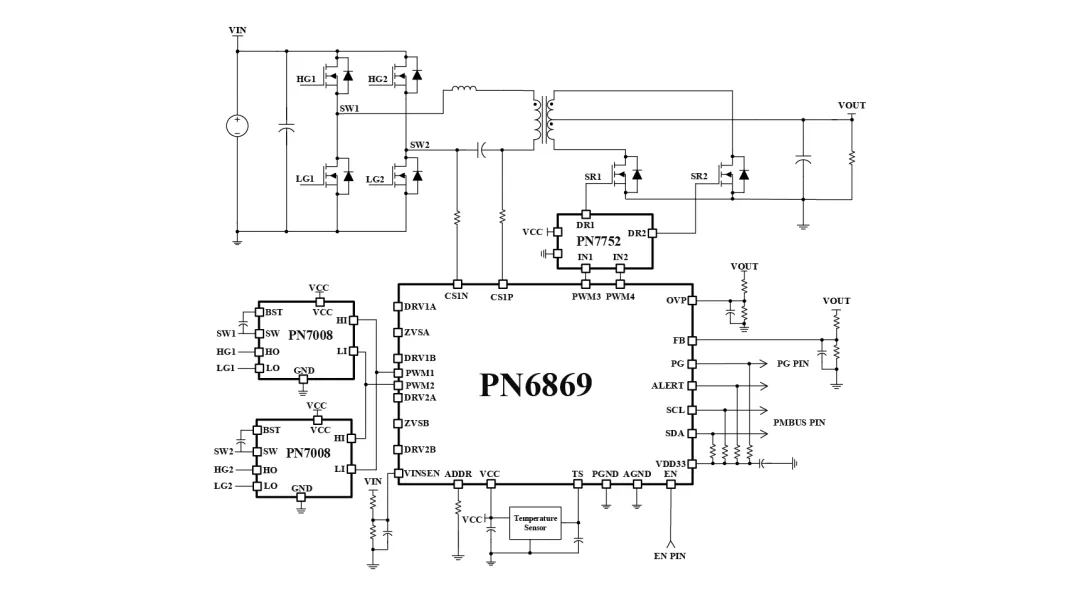
Figure 1. Chipown's open-loop PN6869 application schematic includes external drivers, power transistors and a transformer. Source: Chipown, May 21, 2026.
Oriental Semiconductor's September IBC diagram combines the OSU1000A controller, OSU3010/OSU3000 drivers and SGT MOSFETs. Both vendors offer control and drive options, with different integration choices. A useful comparison therefore requires a complete bill of materials, magnetics design, efficiency measurements and thermal results for the target input, output and power level.
Branch protection follows the voltage domain
The board also has to manage inrush, hot plugging and short circuits. An eFuse controls the power path, limiting current or shutting down a branch under abnormal conditions. This function is separate from voltage conversion.
In Chipown's portfolio, PN7893 and PN788X serve different voltage domains. Its application material gives PN7893 an operating input range of 9V to 80V, covering use on a 48V domain. PN7882 and PN7885 target lower-voltage branches such as 12V; both have a published operating input upper limit of 18V.
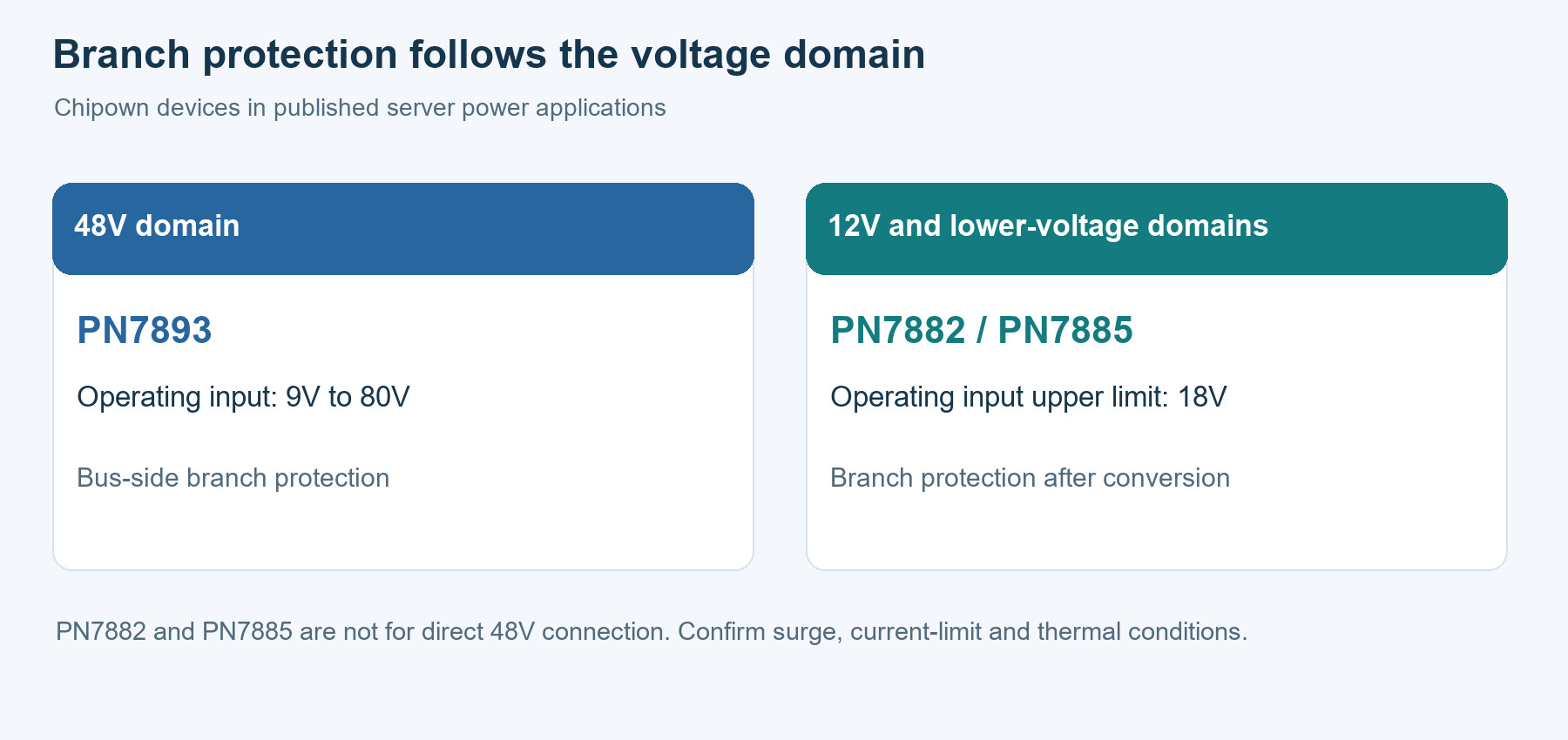
Figure 2. Voltage-domain comparison based on the vendor's published applications. Input range, surge conditions, current limiting and cooling all affect placement.
Protection-device current ratings also need operating context. Charging a large capacitor during startup stresses an internal power transistor differently from continuous conduction. Validation should include startup waveforms, short-circuit shutdown time, retry or latch-off behavior and coordination with upstream and downstream protection. Selectivity testing checks whether a local fault disconnects the intended branch while other branches remain powered.
GPU power separates staged and single-stage approaches
Near the GPU, the supply must maintain a low voltage at high current while responding to load changes. Chipown combines PN68XX multiphase controllers with PN786X power stages. The controller schedules the phases and regulates the output; the power stages switch current through the inductors and capacitors. PN6850 and PN6851 provide point-of-load options for other chips.
Oriental Semiconductor's diagram presents a single-stage 48V-to-1V approach involving OSU1800. OSU1800 is PWM phase-multiplication logic, expanding an input PWM signal into multiple signals for the power stage. The shown architecture also includes an external multiphase controller, OSU3010/OSU3000 drivers and power devices.
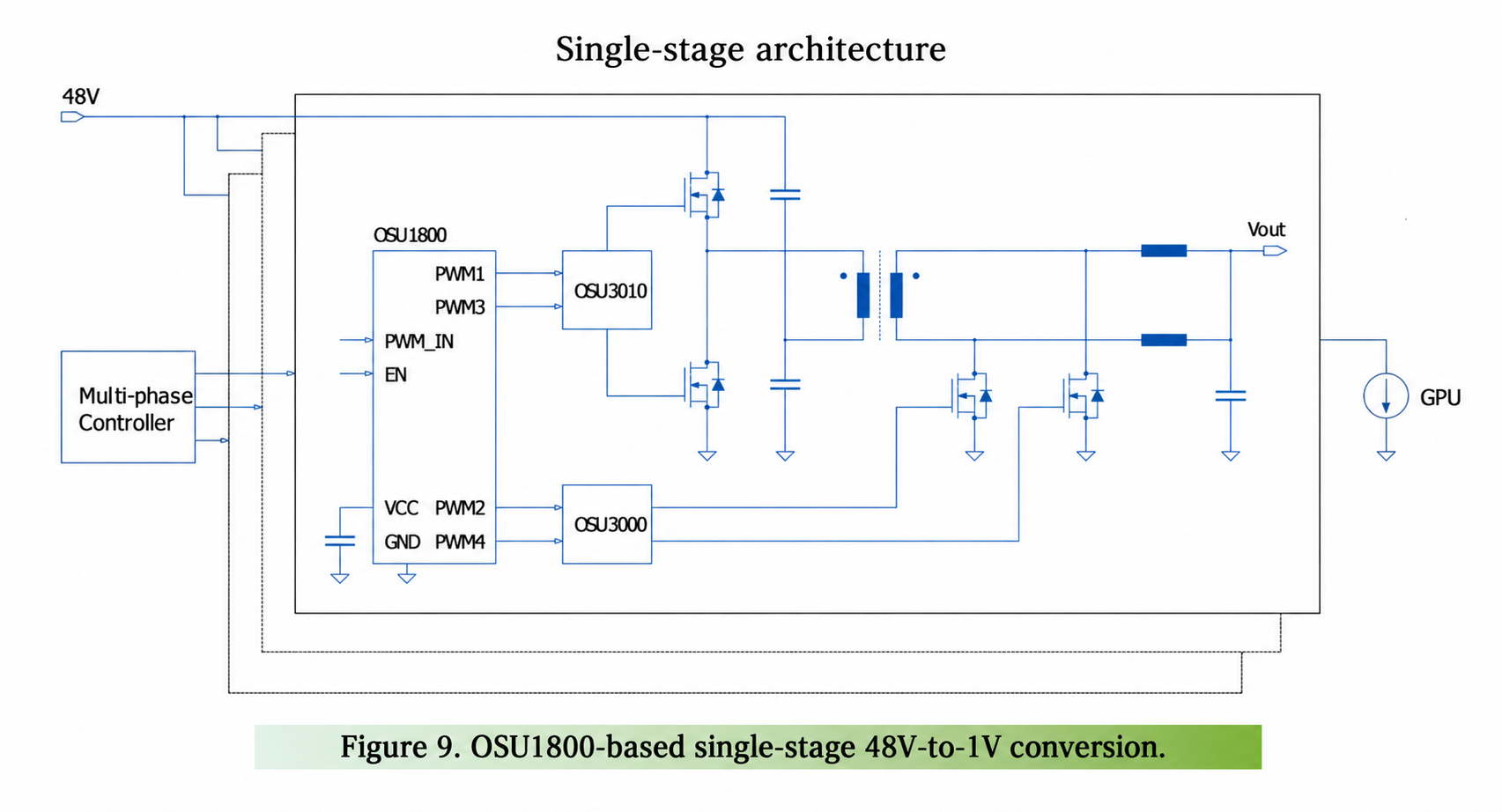
Figure 3. Oriental Semiconductor's published 48V-to-1V single-stage concept includes an external multiphase controller at the left. English captions adapted from its September 1, 2026 white-paper announcement; consult the original for circuit design.
The comparison depends on the intended architecture. A staged supply needs coordinated IBC and final voltage-regulator operation. A single-stage design needs compatible power devices, magnetics and control signals. GPU supply evaluation should include voltage droop, overshoot and recovery time for specified load steps, with the slew rate, output capacitance and temperature recorded alongside the results.
Portfolio coverage becomes useful at the part-number level
The following map groups the vendors' published devices by function. Gaps identify model information not specified in the material reviewed and can guide further supplier discussions.
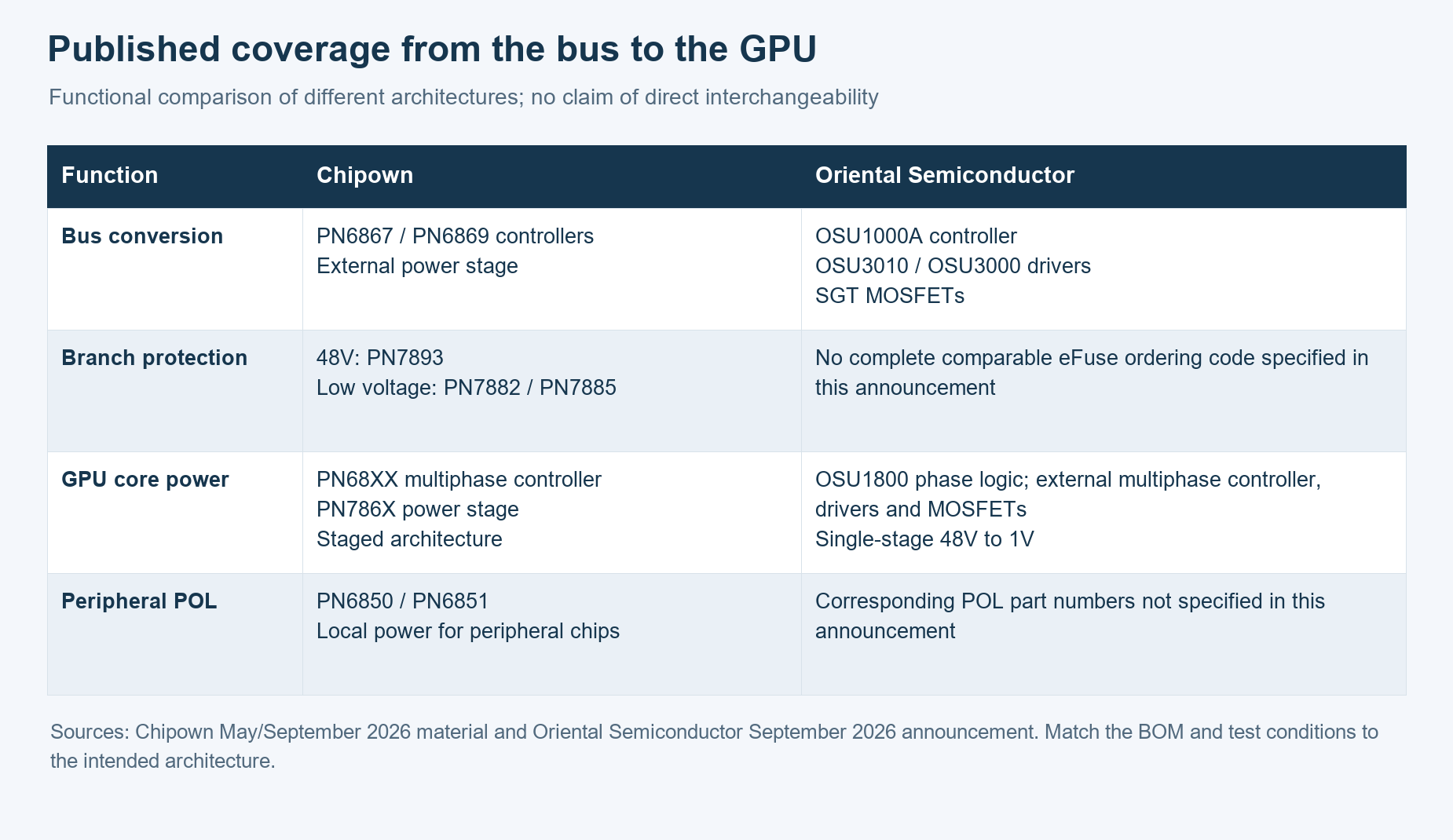
Figure 4. Published Chipown and Oriental Semiconductor device combinations, compiled from May and September 2026 material. Components must be used with their respective architectures.
Commercial progress also varies by product. Chipown says it has conducted joint practical validation with leading customers. Oriental Semiconductor's announcement separately describes volume deliveries of power devices for liquid-cooled computing servers and customer introduction of digital controllers. Joint validation, customer introduction and volume delivery each refer to a particular product scope. Availability needs confirmation for each intended ordering code.
During design-in, the reference-board revision, actual BOM and test report should be traceable to one another. Procurement teams can then check sample versus production versions, batch reliability, lead times and change-notification arrangements. Existing customer validation is most relevant when its device, board and operating conditions are known.
These disclosures provide concrete options for bus conversion, branch protection, GPU power and peripheral point-of-load supply. The next step is to turn the claimed coverage into a matched BOM, reproducible measurements and part-specific delivery commitments.
This article reviews published portfolio coverage. Device selection depends on the target platform's requirements and validation results.