
Resistor Families and Chinese Suppliers: From Chip Parts to Precision, Current Sensing and Power
For engineers and buyers assessing suppliers in mainland China, the word “resistor” covers several different sourcing tasks. A chip resistor on a control board, a shunt in a current measurement circuit and an aluminum-housed braking resistor have different manufacturing processes, operating limits and qualification requirements. A supplier of load banks delivers a complete piece of equipment.
Chinese manufacturers serve these markets through both broad component portfolios and specialist product lines. This article maps the main resistor families to their circuit functions, then introduces examples of mainland suppliers and the product information they have published. Taiwan-based brands and their mainland factories are treated separately in this series.
1. Electrical behavior, construction and application
Resistors can be grouped by electrical behavior into fixed resistors, variable resistors, and nonlinear or resistive sensing devices.
A fixed resistor has a specified nominal resistance. Chip resistors, metal-film parts, alloy shunts and wirewound resistors fall into this group. “Fixed” means the resistance is not intentionally adjusted by the user; temperature, self-heating and aging can still change its value.
A potentiometer usually has two fixed terminals and a moving contact. It can operate as a voltage divider or be connected for variable resistance. Trimmers commonly support factory calibration. Controls that users operate repeatedly also need suitable contact reliability, mechanical life and operating feel.
Thermistors and varistors use changes in resistance for sensing or protection. NTC and PTC devices respond to temperature, while a varistor responds to the voltage across it. Their useful behavior is the response to a changing condition.
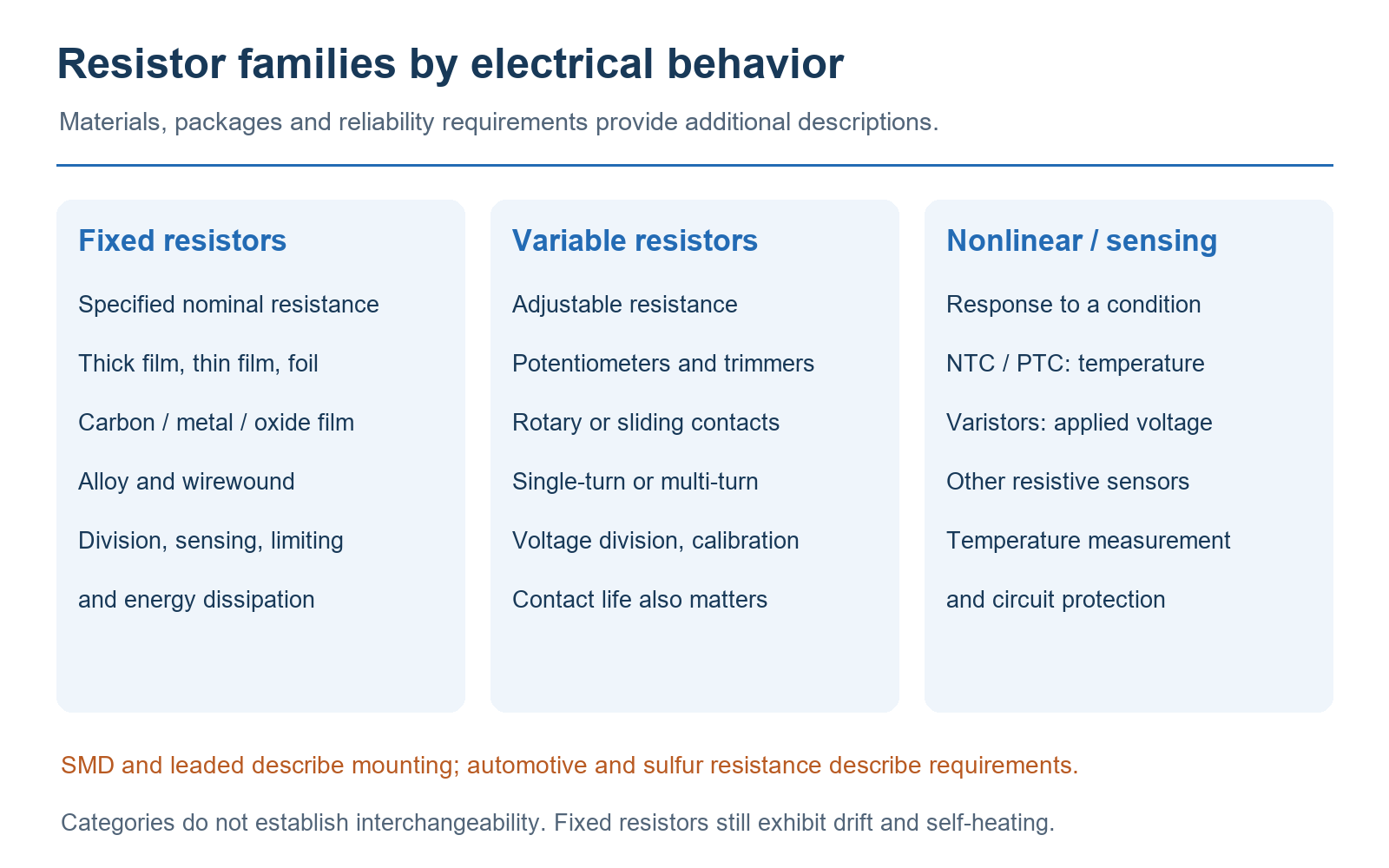
Figure 1. Electrical behavior defines the broad families. Materials, package construction and reliability requirements add further descriptions; they do not imply interchangeability.
A name such as “automotive sulfur-resistant thick-film chip resistor” combines several kinds of information. Thick film describes a manufacturing process, chip describes the mounting form, sulfur resistance describes an environmental requirement, and automotive use involves reliability testing and customer qualification.
Precision and high power describe performance. Different processes can achieve those objectives, with results that also depend on the materials, construction and operating conditions.
2. The main manufacturing routes
Thick-film chip resistors typically start with resistive paste printed onto a ceramic substrate. Firing, resistance trimming and protective layers produce the finished part. Changes in materials, structure and electrodes support variants for high voltage, pulse loads or sulfur exposure as well as general voltage division and current limiting.
Requirements vary within the thick-film family. A general divider may be selected mainly for resistance and tolerance. A power input circuit adds pulse loading, while industrial equipment exposed to sulfur compounds needs suitable electrode protection.
Thin-film resistors generally use a deposited resistive layer that is patterned to achieve the required resistance. In precision feedback and instrumentation, initial tolerance, temperature coefficient, noise and long-term stability all affect measurement performance. Temperature coefficient, commonly stated in ppm/°C, describes temperature-related resistance change; initial tolerance describes deviation under specified reference conditions.
Some thick-film products also serve precision applications. Thin-film products have their own humidity, load and pulse limits. A useful comparison therefore matches both the resistance value and the operating conditions.
Metal-foil resistors use patterned foil for applications requiring tight control of measurement error. They are a distinct construction from metal-film and metal-oxide-film resistors. Alloy current-sense resistors often have milliohm resistance values and appear as chip parts, metal-plate shunts or modules with separate sensing connections.
Low resistance is also available through thick-film construction. FOJAN's June 2026 introduction of the FRL series describes a low-resistance thick-film chip product. Its sensing function can overlap with alloy products, while resistance range, power rating, temperature coefficient and connections remain specific to each series.
Wirewound resistors use resistance wire around a supporting body. Coatings, ceramic cases and aluminum housings provide insulation, mounting and heat-transfer features. Names such as cement resistor or aluminum-housed resistor describe the enclosure; the internal construction still needs to be checked. Winding inductance matters in fast-pulse or high-frequency circuits, where special winding arrangements can reduce it.
Carbon-film, metal-film and metal-oxide-film parts are common among leaded resistors. Film constructions also appear in cylindrical surface-mount packages, so process and mounting form should be recorded separately.
3. Voltage division, current measurement and energy dissipation
A voltage divider depends on the resistance ratio. Precision measurement may require that ratio to remain stable as temperature changes. Resistor networks place several elements in one package or on one substrate, but their internal connections can be independent or share terminals. Ratio tracking depends on the particular specification.
Current sensing makes the trade-off between signal level and heat easy to quantify. In an ideal example, 100 A through 1 mΩ produces a 100 mV signal and dissipates 10 W. Reducing the resistance to 0.5 mΩ gives 50 mV and 5 W at the same current.
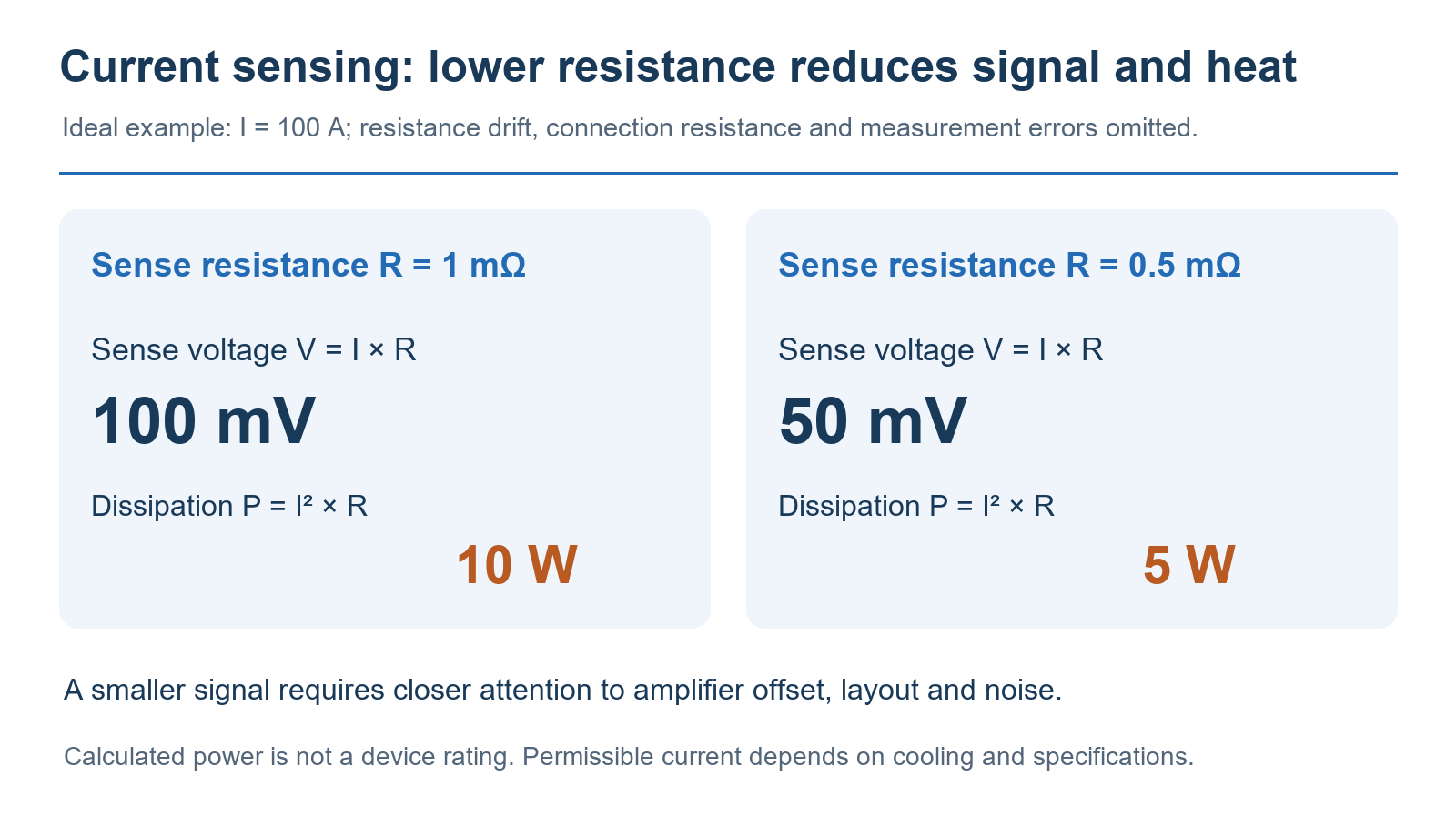
Figure 2. Calculated from V = IR and P = I²R. These are ideal examples, not product ratings. Permissible current depends on the specified thermal and mounting conditions.
A smaller signal makes amplifier offset, noise, connection resistance and board layout more consequential. Four-terminal construction separates the main current connections from the voltage-sensing connections, helping reduce errors from connection voltage drops. The result still depends on the device and layout.
Resistance determines signal level and dissipation, temperature coefficient affects thermal error, and rated power applies under stated cooling conditions. A sensing design has to satisfy these requirements together.
In April 2026, Kaibu's RESI brand introduced SRES and HRES shunt sensing modules that combine the resistive element and sensing structure. The announcement stated that sample deliveries had begun.
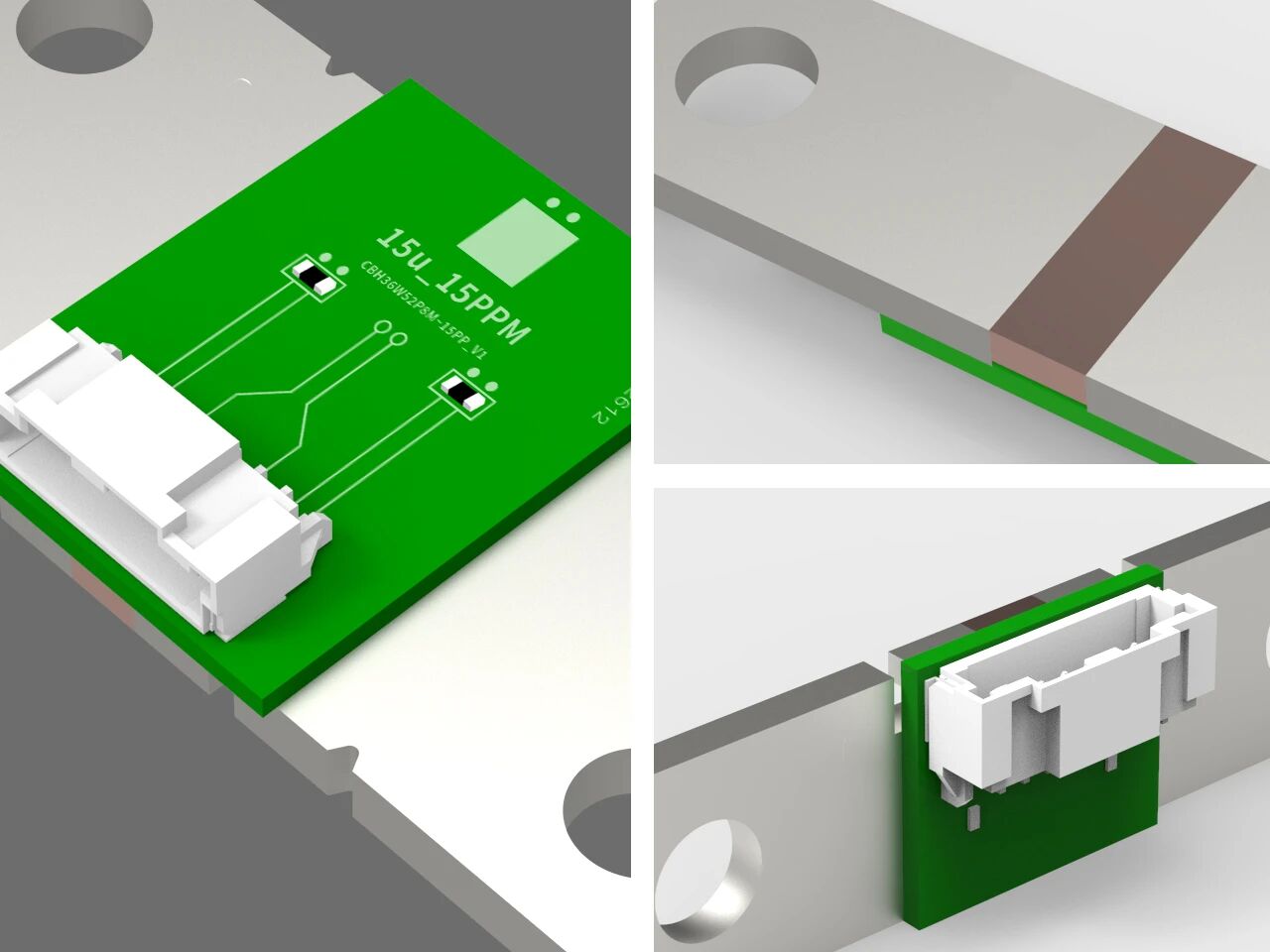
Figure 3. Official RESI product rendering associated with the April 2026 announcement. The original structure and markings are preserved. Sample availability does not establish adoption in a customer's production program.
Power resistors serve a different set of loads. Precharge resistors limit capacitor charging current; discharge resistors release stored energy; braking resistors absorb energy returned during motor deceleration. Continuous power, pulse duration, repetition, mounting and cooling all influence temperature.
Load banks add module combinations, temperature monitoring and control or protection functions. Guangdong Fullde's January 2026 material described air/liquid hybrid load equipment for data-center rack heat simulation and cooling-system validation. That is a system-level delivery, with a different scope from a discrete resistor.
4. Temperature sensing, surge protection and adjustment
NTC thermistors decrease in resistance as temperature rises. A sensing circuit measures resistance and uses the resistance-temperature characteristic to estimate temperature. Excessive measuring current causes self-heating, so current, response time, mounting and the temperature range all affect the result.
Power NTC devices use relatively high cold resistance to limit startup current. As the device heats, resistance falls and running loss decreases. Temperature-sensing NTC parts aim to minimize self-heating, giving the two applications different design objectives and load limits.
Nanjing Shiheng's October 2026 application material discussed an MF51 glass-encapsulated NTC with a ceramic base for photovoltaic inverter temperature measurement and installation stress. The package and mounting structure contribute to the device's behavior alongside the sensing element.
PTC thermistors increase in resistance with temperature. Certain ceramic PTC materials rise sharply in resistance near a characteristic temperature and support current limiting, temperature protection or self-regulating heating. Polymer PTC devices use a different material system and are common in resettable overcurrent protection.
Fenghua's August 2026 SPTC introduction applied PTC behavior to high-voltage precharge.
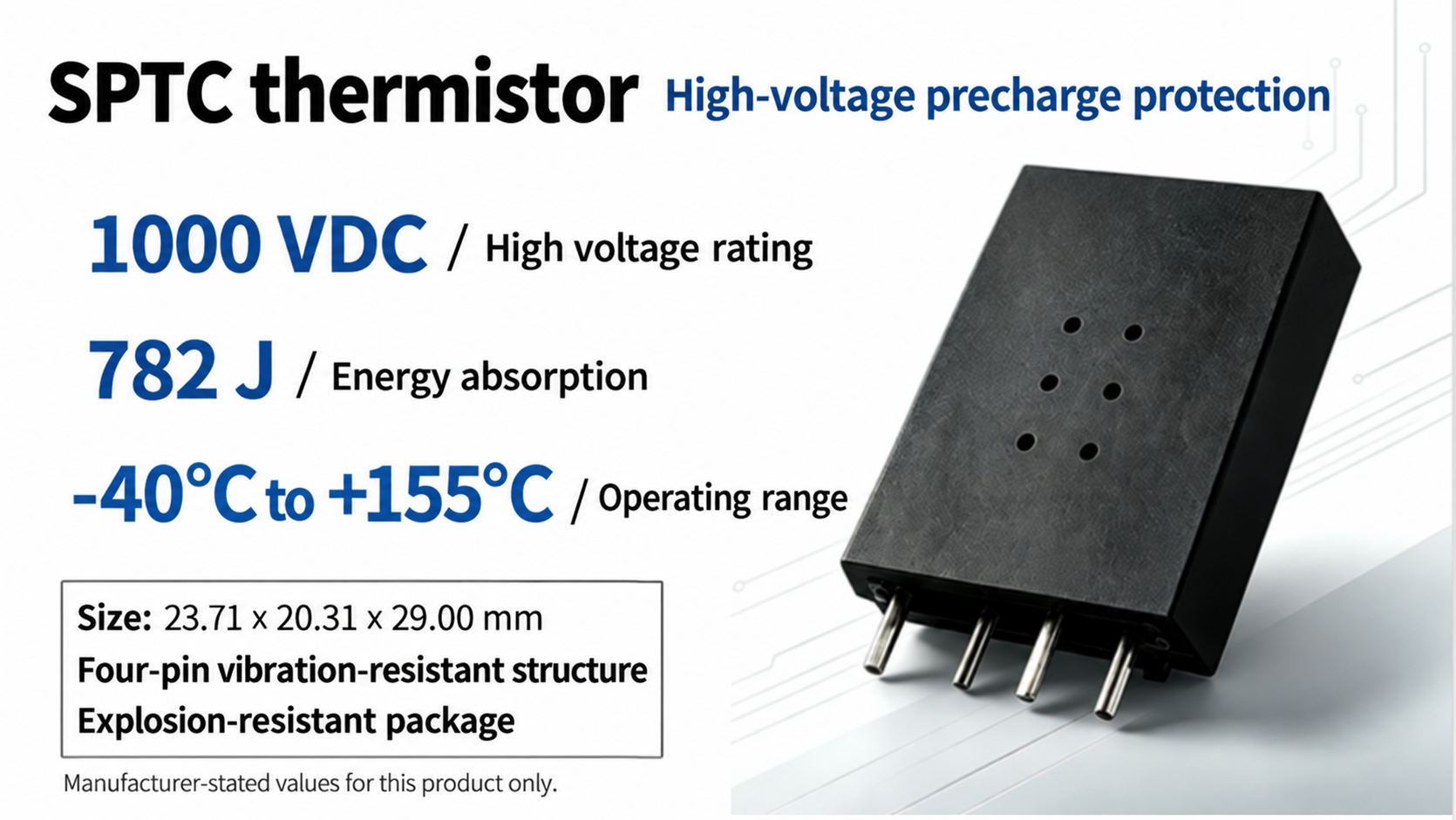
Figure 4. English localization of Fenghua's August 2026 SPTC product graphic. Values are the manufacturer's stated figures for this product and are not general ratings for PTC devices.
Varistors respond primarily to applied voltage. Their conductivity rises strongly in the relevant voltage region, limiting transient overvoltage. Continuous operating voltage, varistor voltage, clamping voltage and surge capability under a specified waveform describe different conditions.
Variable resistors use rotating or sliding contacts for adjustment. Single-turn and multi-turn designs serve different control and calibration tasks. Digital potentiometers generally belong to the IC category: an interface controls an internal resistor network, subject to supply and terminal-voltage limits.
Photoresistive, strain-sensitive and piezoresistive devices form other branches. Their materials and applications overlap with the sensor industry and will be covered in a supplementary directory.
5. Examples of mainland Chinese supplier portfolios
The following examples connect manufacturers to identifiable product directions. The dates refer to the cited product or application materials, rather than a claim that every listed product entered volume production at that time.
| Supplier | Product direction | Published information and status |
|---|---|---|
| Fenghua Advanced Technology | RH sulfur-resistant thick-film resistors, SPTC thermistors and high-energy chip varistors | Official product introductions, August 2026 |
| FOJAN | FRL low-resistance thick-film chip resistors | Official product introduction, June 2026 |
| Huacheng Electronics | Thick-film, thin-film, alloy and network resistor categories | Website categories; availability requires series-level confirmation |
| Kaibu / RESI | SRES and HRES shunt sensing modules | April 2026 material stated that sample deliveries had begun |
| Nanjing Shiheng | MF51 glass-encapsulated NTC products with a ceramic base | Official application material, October 2026 |
| Guangdong Fullde | Power loads and complete test equipment | Official equipment and delivery material, January 2026 |
These portfolios address different purchasing requirements. Fenghua's RH series addresses electrode degradation caused by sulfur compounds. Its SPTC and chip-varistor introductions address sensing and protection functions. FOJAN's FRL belongs to the low-resistance branch of thick-film products. Huacheng's categories span several processes and structures, with specifications varying by series.
RESI's sensing modules, Shiheng's thermistors and Fullde's load equipment illustrate how far the delivery scope can extend. A discrete device, a measurement module and a test system contain different manufacturing and engineering work. Their shipment counts are not a common measure of business scale.
For overseas sourcing teams, recording the brand, legal entity and manufacturing site separately helps organize this supplier map. This series focuses on mainland-owned brands and treats Taiwan-based suppliers separately. Proprietary products and distribution businesses also need distinct entries within a group's portfolio.
6. From a catalog entry to a qualified product
General-purpose chip resistors depend on manufacturing consistency, range coverage and repeatable volume supply. Precision and sensing products place more emphasis on temperature drift, stability and measurement error. Power products combine electrical specifications with cooling arrangements and repeated load behavior.
A product family usually includes multiple resistance values, packages and performance grades. Catalogs identify the direction of a portfolio, datasheets establish parameter combinations and test conditions, and supply information establishes whether the required part can be obtained. Product announcement, sampling and volume production describe different stages.
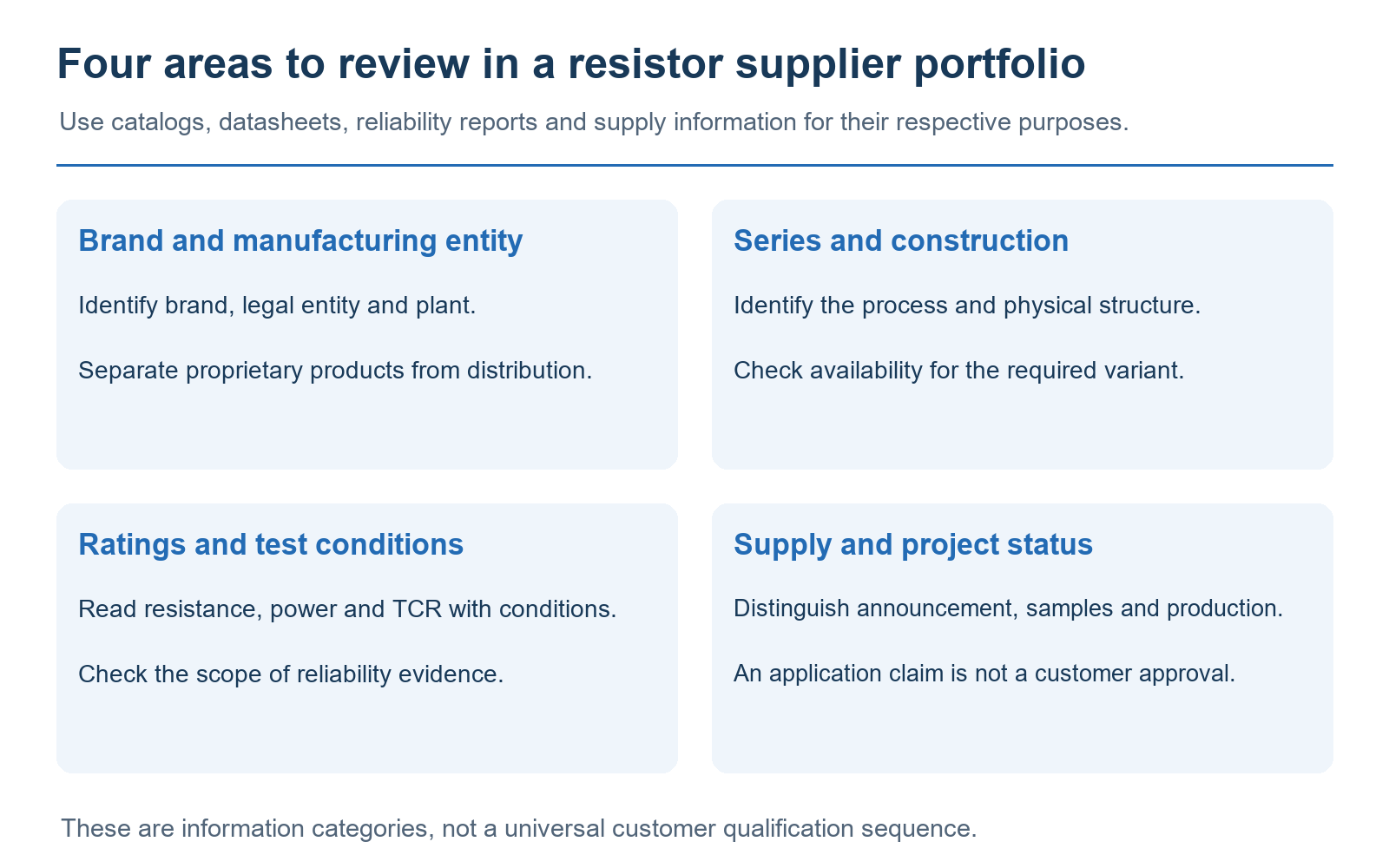
Figure 5. Four areas of supplier information to review. They are reading and verification categories, not a universal customer approval sequence.
Automotive qualification involves several types of evidence. AEC-Q200 specifies reliability test requirements for passive components. IATF 16949 concerns the organization's quality management system. PPAP and customer testing support approval of specific products and programs. A system certificate, a series test report and a customer's approval record answer different questions.
Market figures need similarly explicit definitions: chip resistors or all resistor types, revenue or unit volume, production in mainland China or sales by mainland-owned brands. Capacity may be annual or monthly, installed or planned. Distributor inventory for common parts describes the availability of those parts, with limited relevance to custom power products or sensing modules.
Later articles in this series examine chip and precision sensing products, power and specialty resistors, and sensitive and adjustable devices before reviewing manufacturers and market developments. The aim is to build a supplier directory tied to identifiable product series and published supply status.
This article uses public information. Calculations and application examples explain operating principles; product ratings, availability and qualification status remain subject to current manufacturer and customer documentation.