
Single-Layer Ceramic Capacitors for High-Speed Optical Modules: China's Suppliers and the Evidence Behind Their Progress
For optical-module manufacturers assessing Chinese capacitor suppliers, two developments deserve separate attention: faster module shipments and the qualification of components inside those modules. In a November 6, 2026 disclosure, Zhongji Innolight said its third-quarter shipments of 800G and 1.6T modules continued to expand, with revenue growth from 1.6T products accelerating. Hongda Electronics had reported in September that several optical-module component categories, including single-layer ceramic chip capacitors, had reached volume supply.
Single-layer capacitors serve DC-blocking, coupling or high-frequency bypass functions in some module designs. Their commercial opportunity depends on the circuit architecture and on repeatable performance after assembly. Module growth alone cannot establish capacitor demand per module or the revenue available to a particular supplier.
Module architecture determines capacitor content
Zhongji Innolight reported that orders for both 800G and 1.6T products increased sequentially in the third quarter of 2026. Its material planning included advance purchases, long-term agreements, prepayments and new suppliers. These disclosures describe module orders and overall material arrangements; they do not quantify single-layer capacitor purchases.
The aggregate data rate also leaves important design differences unresolved. At OFC 2026, Lumentum demonstrated two 1.6T pluggable modules: one used a silicon-photonics engine with continuous-wave lasers, while the other used eight 200G electro-absorption modulated lasers. The optical transmitters require different implementations of drive, bias and electrical connections despite sharing the same total data rate.
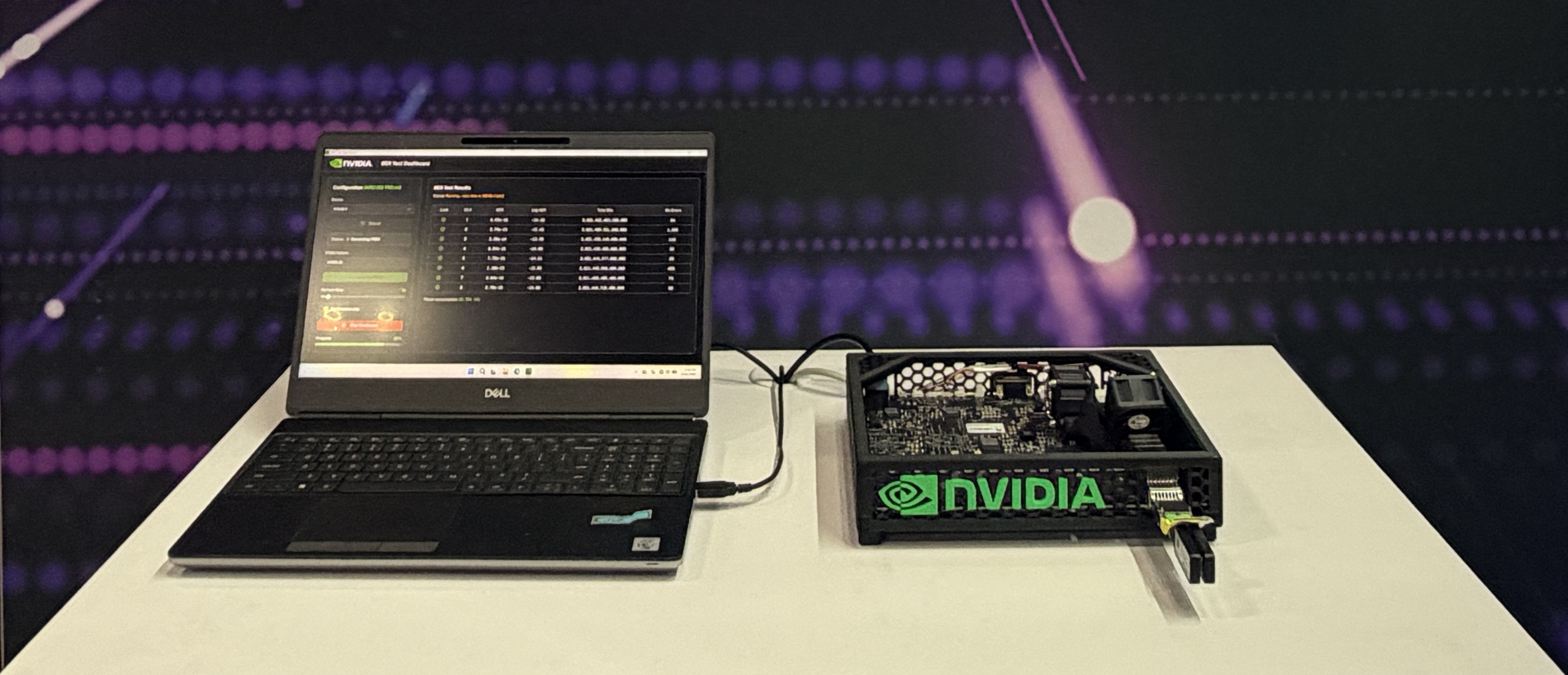
Figure 1. Lumentum's published OFC 2026 demonstration of a 1.6T silicon-photonics module solution. The photograph does not disclose the internal component configuration.
Estimating capacitor demand therefore requires the share of modules using a relevant architecture and the number of applicable positions in each design. Discrete optical assemblies and integrated optical engines have different assembly requirements; other capacitor structures may perform DC blocking or bypassing. Current disclosures support growth in high-speed module shipments and volume supply of certain Chinese ceramic components. They do not yet provide the architecture-specific shipment data needed to size the single-layer capacitor market.
Assembly controls the measured high-frequency response
A series capacitor can separate the DC bias of adjacent stages while passing signals within the intended band. In a bypass position, the capacitor provides a low-impedance path for noise over a specified frequency range. Series applications require attention to transmission loss and reflection. Bypass performance also depends on the ground return and its parasitic inductance.
A single-layer chip generally consists of a ceramic dielectric with metal electrodes on opposite faces. Some microassembly processes attach the chip to a substrate using conductive adhesive or solder, then connect its upper electrode with a bond wire. Wire length, pad dimensions, adhesive thickness and nearby traces affect the assembled response. Identical nominal capacitance consequently does not guarantee identical insertion or return loss.

Figure 2. A tray of Dalicap single-layer ceramic capacitor samples exhibited at the Shenzhen International Industrial Manufacturing Technology and Equipment Exhibition.
As dimensions shrink, placement offsets and electrode-edge tolerances become larger relative to the device. Ceramic thickness, electrode geometry, dicing damage and metal adhesion all require control. For a module manufacturer, a successful sample measurement is an early milestone. Repeat orders depend on consistent frequency response, bond quality and reliability across subsequent production lots.
Chinese suppliers report different stages of commercialization
Hongda Electronics' subsidiary Hongda Hengxin supplies single-layer ceramic capacitors and thin-film integrated circuits. In September, the parent said single-layer ceramic chip capacitors, ceramic thin-film circuits and shaped ceramic structures had entered the supply systems of several leading optical-module manufacturers and reached volume supply. The disclosure covers multiple product categories together. It does not identify individual customers, data-rate platforms or single-layer capacitor shipment volumes.
Torch Electron's subsidiary Tianji Technology operates in microwave chip capacitors, thin-film circuits and thin-film integrated passive devices. Torch's interim report described growing first-half demand from civilian markets, including optical communications, with civilian orders exceeding specialty-market orders. Tianji's capabilities extend from dielectric formulation and preparation to microwave passive-device production. Its order mix nevertheless includes other applications and products beyond capacitors.
Hongyuan Electronics reported development of ultra-miniature single-layer chip capacitors for high-speed optical modules. It also disclosed work on ceramic packages for such modules. These are distinct product lines: the package supports and encloses the assembly, while the capacitor performs an electrical function. The capacitor disclosure establishes a development direction; qualification and delivery require subsequent evidence.
Hongming Electronics' Chengdu Hongke business already offers single-layer ceramic chip capacitors and spans ceramic materials, compatible pastes and component manufacturing. Hongming's prospectus describes semiconductor thin-film processes and metallized surfaces suitable for microassembly. These capabilities are relevant to miniature components and bonding, although the cited public evidence mainly establishes product and process capability.
Dalicap published a single-layer ceramic capacitor catalogue in April 2026, and its exhibition material identifies optical communications and optical transceiver assemblies as applications. In an October investor-platform response, it said these capacitors still represented a very small proportion of core-business revenue as of the first half. Product availability and material revenue contribution remain different milestones.
Comparable tests require matched specifications and assembly conditions
Supplier evaluation starts with the intended circuit position. A DC-blocking device must deliver suitable transmission and reflection characteristics across the target band. A bypass device must provide the required impedance after mounting, including its ground connection.
Even within DC blocking, equal nominal capacitance does not establish interchangeability. Dielectric material, chip dimensions and thickness, electrodes, rated voltage, placement and bonding requirements need to match the design. Mechanical and connection compatibility precede performance validation.
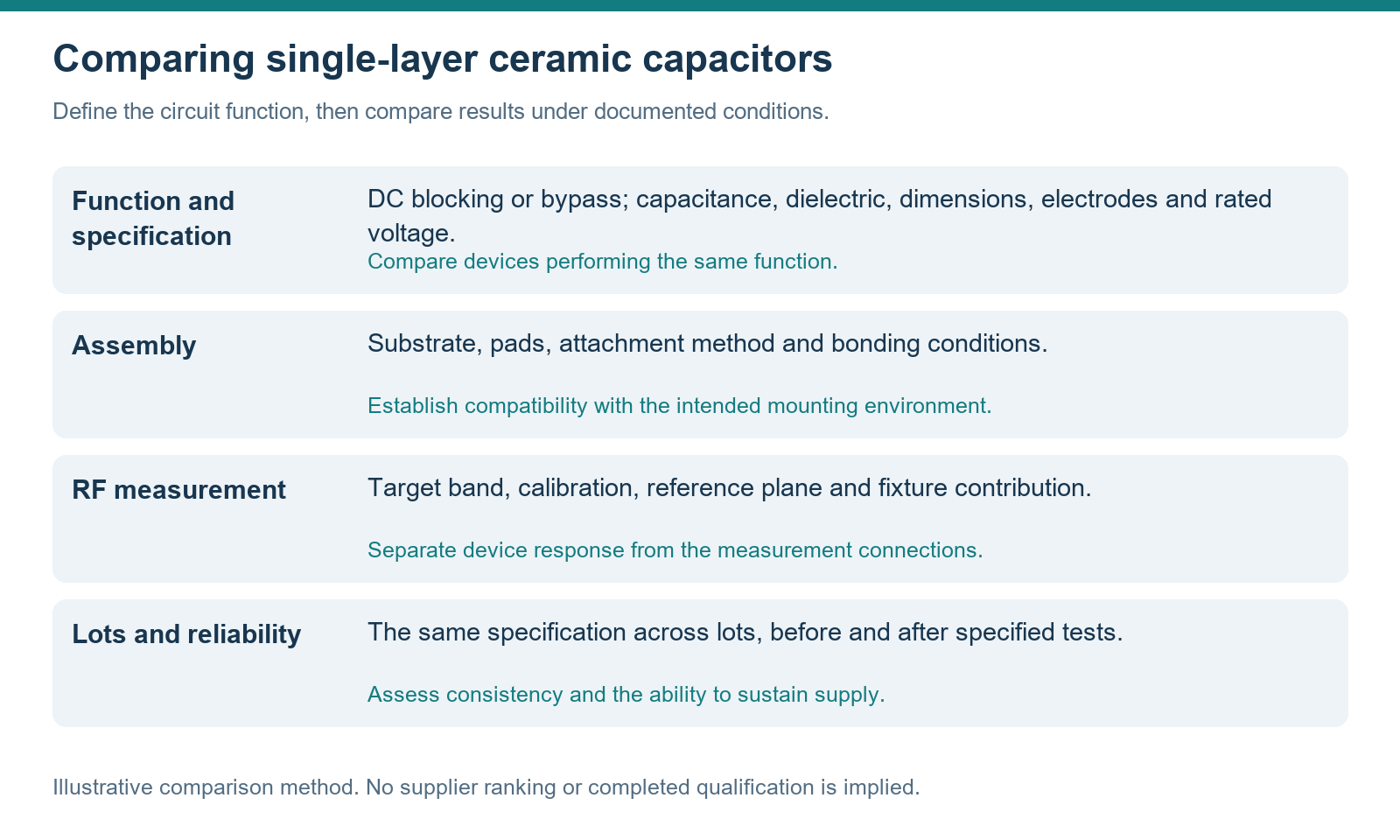
Figure 3. A comparison framework for single-layer ceramic capacitors. This is an explanatory guide, not evidence of completed supplier qualification or a performance ranking.
Insertion-loss and return-loss curves should cover the same target band under comparable substrate and connection conditions. The fixture calibration, measurement reference plane and removal of fixture effects also matter. Otherwise, an apparent difference between products may include differences in the test connections.
More persuasive evidence combines documented assembly conditions with results across production lots and before and after specified reliability tests. The disclosures cited here cannot establish a matched-condition ranking of Chinese and overseas suppliers. Specific qualification results and sustained delivery will determine whether Chinese products gain wider use.
Revenue disclosures show expansion but do not isolate capacitor profit
Hongda's first-half 2026 report disclosed RMB151 million in combined civilian ceramic thin-film circuit and single-layer ceramic capacitor revenue, up 240.79% year on year. Hongda Hengxin separately reported approximately RMB155 million in revenue and RMB51.70 million in net profit. The first measure is a civilian product grouping; the second covers a subsidiary. They show expansion in related products and a profitable manufacturing business, but do not isolate single-layer capacitor sales, average prices or profit.
Torch reported that Tianji kept its gross margin broadly stable during raw-material price increases through process cost reductions and improved yields. Small components still require dicing, screening, testing and lot traceability. Concentrated specifications can support longer production runs and spread fixed spending over more saleable units. Fragmented orders can increase changeovers, repeat qualification and inventory costs. Similar revenue growth can therefore produce different profit outcomes.
Hongyuan offers another perspective. Its ceramic capacitor revenue fell 22.56% year on year to approximately RMB415 million in the first half of 2026, while civilian ceramic capacitor revenue increased. Optical communications was among the cited civilian demand sources. For suppliers spanning high-reliability and civilian markets, new optical projects coexist with the performance and delivery schedules of established businesses.
As of November 2026, rising high-speed module shipments and volume supply of component groups containing single-layer capacitors are supported by disclosures. The next commercial milestone is repeated qualification and delivery of particular specifications across more module platforms. Connecting those deliveries to product-level revenue would show how much of the optical-module expansion is reaching the capacitor business.