“Low impedance”, “long life” and “miniature” appear across aluminum electrolytic capacitor catalogs. These labels do not mean that competing products solve the same problem. In a power supply, the critical constraint may be high-voltage bulk capacitance, ripple heating, enclosure temperature or available board space.
Jianghai, Aihua (AiSHi) and Lelon illustrate different product priorities. Other suppliers offer useful examples of thin multilayer structures, smaller snap-in packages and low-inductance terminations. Comparing them requires the operating conditions behind each number.
1. Jianghai: high-voltage bulk capacitance and high-current structures
Jianghai traces its history to 1958, Aihua to 1985 and Lelon to 1976. Their reported 2025 revenues were approximately RMB 5.484 billion, RMB 3.972 billion and NT$11.293 billion respectively. Lelon's figure is roughly RMB 2.604 billion using the annual average exchange rate. These figures provide company context, not a ranking of capacitor performance.
Jianghai's 2025 annual report describes electrode-foil development around high specific capacitance, mechanical strength and consistency. It also reports approximately 75% self-supply of high-voltage formed foil. That material base helps explain its emphasis on high-voltage, high-capacitance products; it does not prove superiority in every application.
The CDVT family uses a hollow aluminum case and an annular structure. The referenced catalog covers 350–500 V devices. One 450 V, 4,700 μF example, measuring 77 mm in diameter and 130 mm in length, specifies 24.2 A RMS ripple at 105°C and 120 Hz, with maximum ESR of 25.3 mΩ at 25°C and 120 Hz.
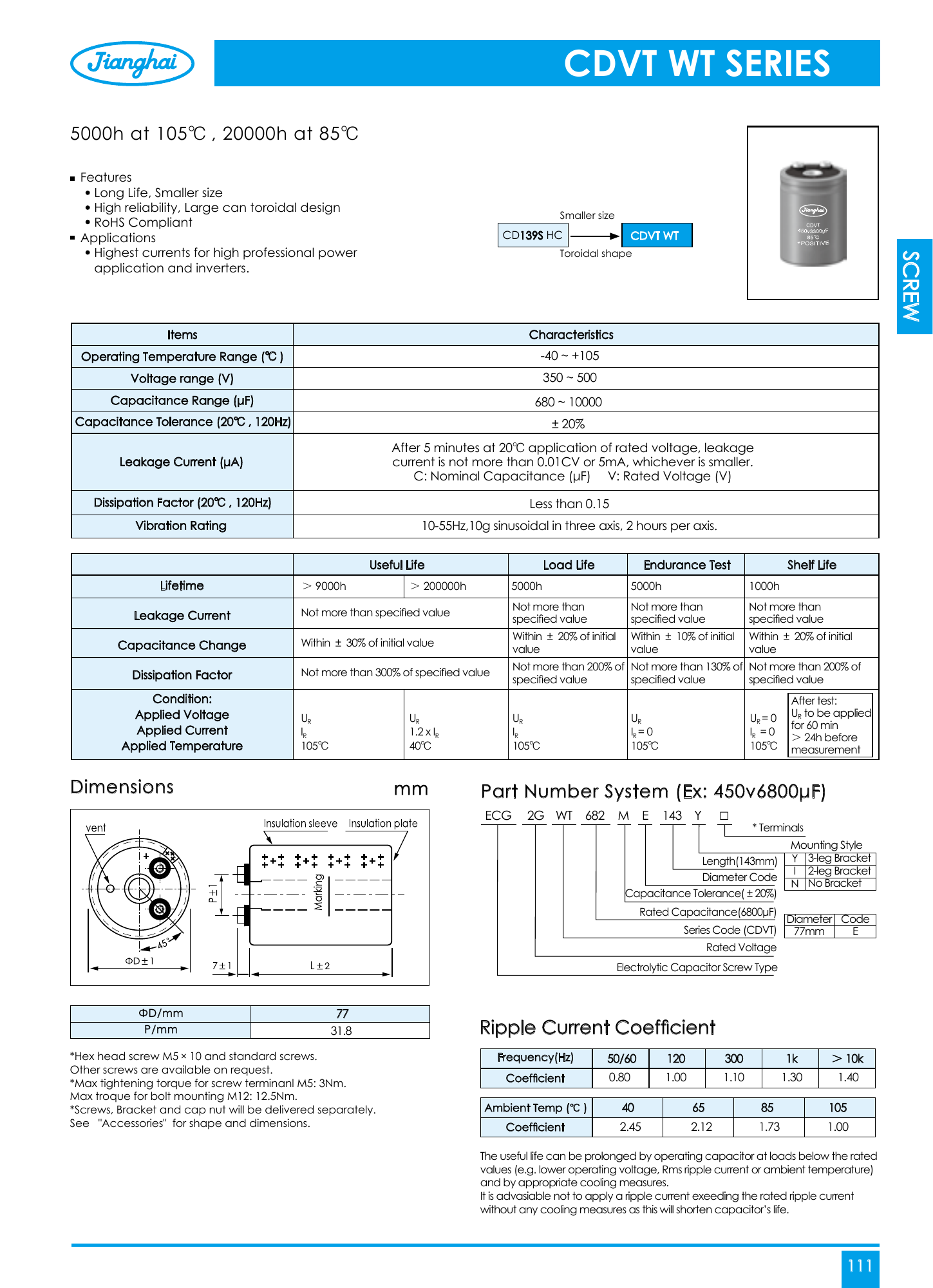
Figure 1. Original manufacturer datasheet available on the website, uploaded in July 2026. Read the structure, endurance requirements and ripple-current correction factors together.
Ripple-current loss depends approximately on I² × ESR. Holding ESR constant, a 10% increase in current produces roughly 21% more resistive loss. This is a calculation, not a measured temperature-rise result.
The hollow center provides an additional heat-exchange surface, but its benefit depends on the actual cooling arrangement. Such structures are relevant to equipment such as variable-frequency drives and inverters, where current and heat can dominate the design. The datasheet also cautions that excessive ripple without adequate cooling shortens life.
2. AiSHi: lifetime choices and a measurable height tradeoff
Aihua's capabilities cover electrolyte, etched and formed foil, and manufacturing equipment. Its snap-in LT, LX and LB series include 105°C endurance ratings of 5,000, 7,000 and 10,000 hours respectively. Their voltage and dimensional ranges differ. An LB part is not automatically a twice-as-long-lived substitute for any LT part.
The SA hybrid series offers a useful example of miniaturization. For 35 V and 330 μF, the catalog lists both 10 × 10.5 mm and 10 × 12.5 mm cases, expressed as diameter × length. Their specified ESR values are 18 mΩ and 17 mΩ, while both carry a 2.8 A ripple-current rating at 100 kHz. The series specifies 4,000 hours at 125°C under its endurance conditions.
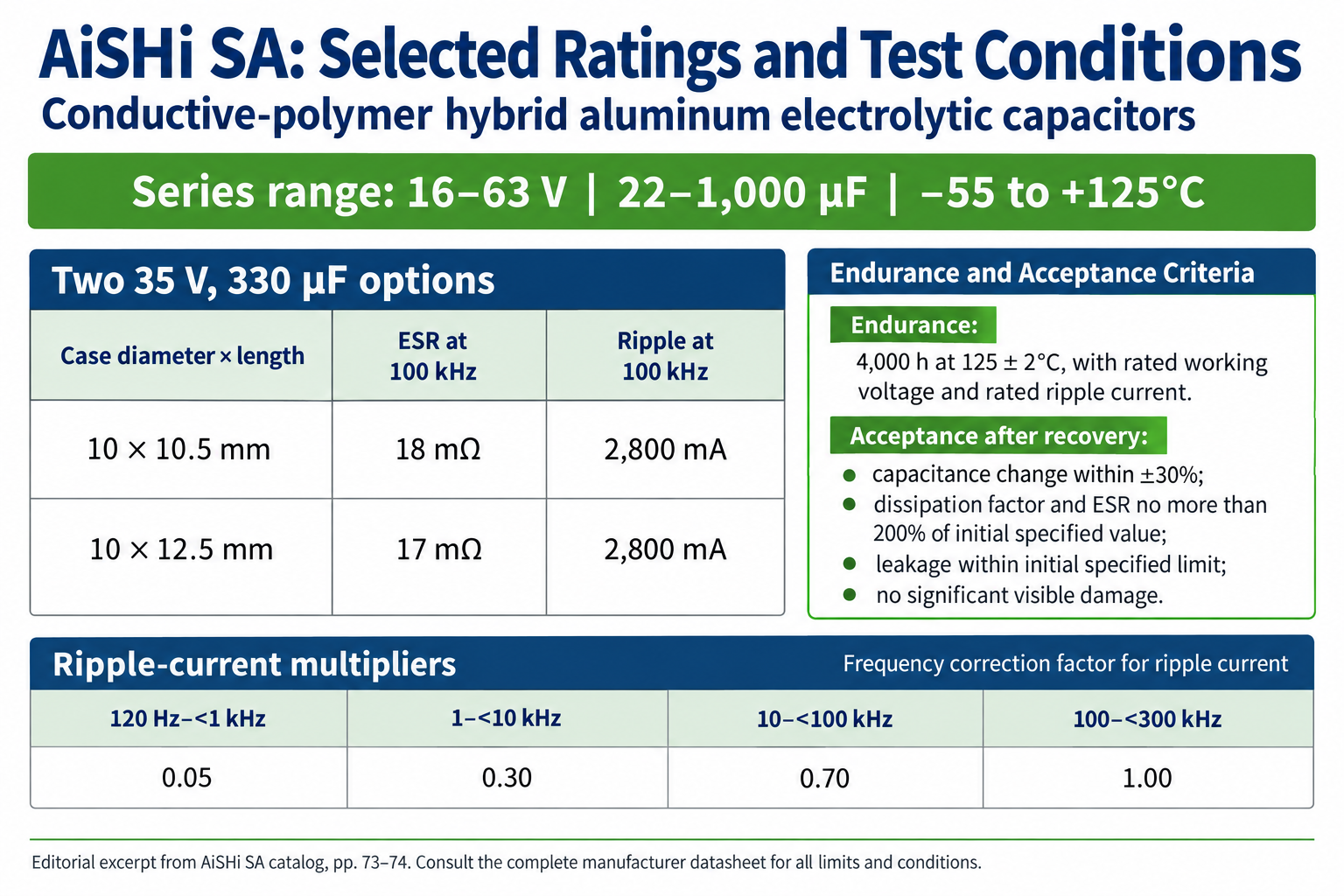
Figure 2. English editorial excerpt of AiSHi SA series information, not a replacement for the complete manufacturer datasheet. Compare the two 35 V, 330 μF case sizes with the original temperature, frequency and endurance conditions attached.
Reducing the height by 2 mm retains the same nominal capacitance and rated ripple current, while ESR rises from 17 to 18 mΩ. At equal current and otherwise equal conditions, that difference corresponds to about 6% more resistive loss. It does not directly predict temperature rise.
This is a concrete engineering tradeoff: the shorter device may fit a height-limited assembly, while the taller one offers a slightly lower specified ESR.
3. Lelon: hybrid products for hotter operating conditions
Lelon's range spans wet, solid-polymer and hybrid capacitors, alongside material and equipment capabilities. Its high-temperature hybrid families include HUW at 135°C, HUE at 145°C and HUJ at 150°C.
A hybrid structure combines the low-ESR contribution of conductive polymer with liquid electrolyte that supports oxide-film repair. Seals, internal connections and aging behavior still matter. The word “hybrid” alone is not a complete reliability specification.
At 35 V, 330 μF and 10 × 12.5 mm, AiSHi SA and Lelon HUW both specify 17 mΩ ESR. Their ripple-current figures require closer reading: SA lists 2.8 A, while HUW lists 3.95 A at 125°C and 2.4 A at 135°C, all at 100 kHz. The SA endurance condition is 125°C for 4,000 hours; the referenced HUW size specifies 135°C for 4,000 hours.
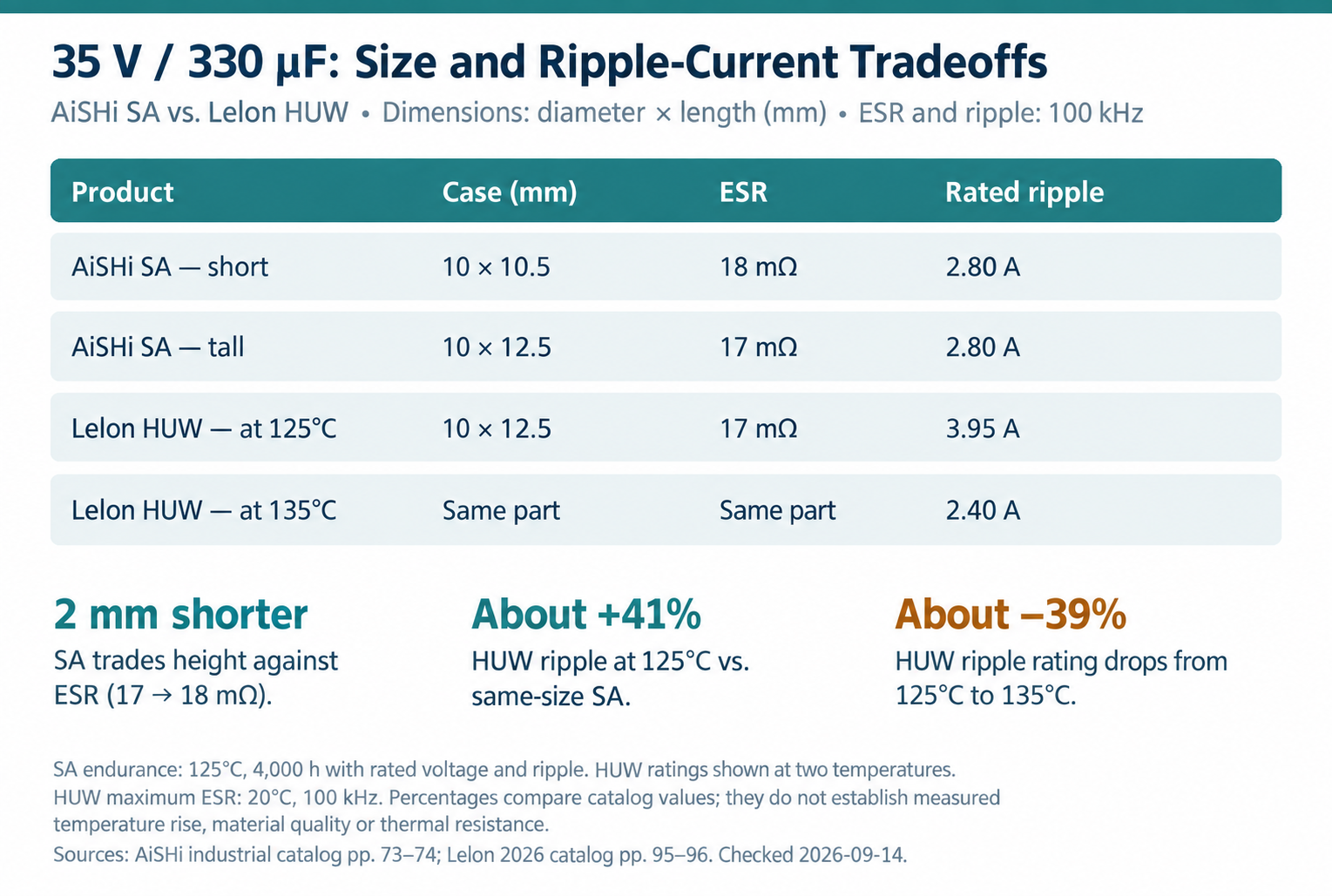
Figure 3. Catalog-value comparison for 35 V, 330 μF parts. Different temperatures and test conditions must remain visible when comparing ripple-current ratings.
At 125°C, the HUW ripple rating is about 41% higher than that of the same-size SA example. That is a comparison of published ratings, not a controlled cross-brand test. It does not identify the materials responsible or establish a difference in thermal resistance.
For the same HUW part, moving from 125°C to 135°C reduces the listed ripple-current allowance by approximately 39%. The temperature attached to the current rating is therefore essential.
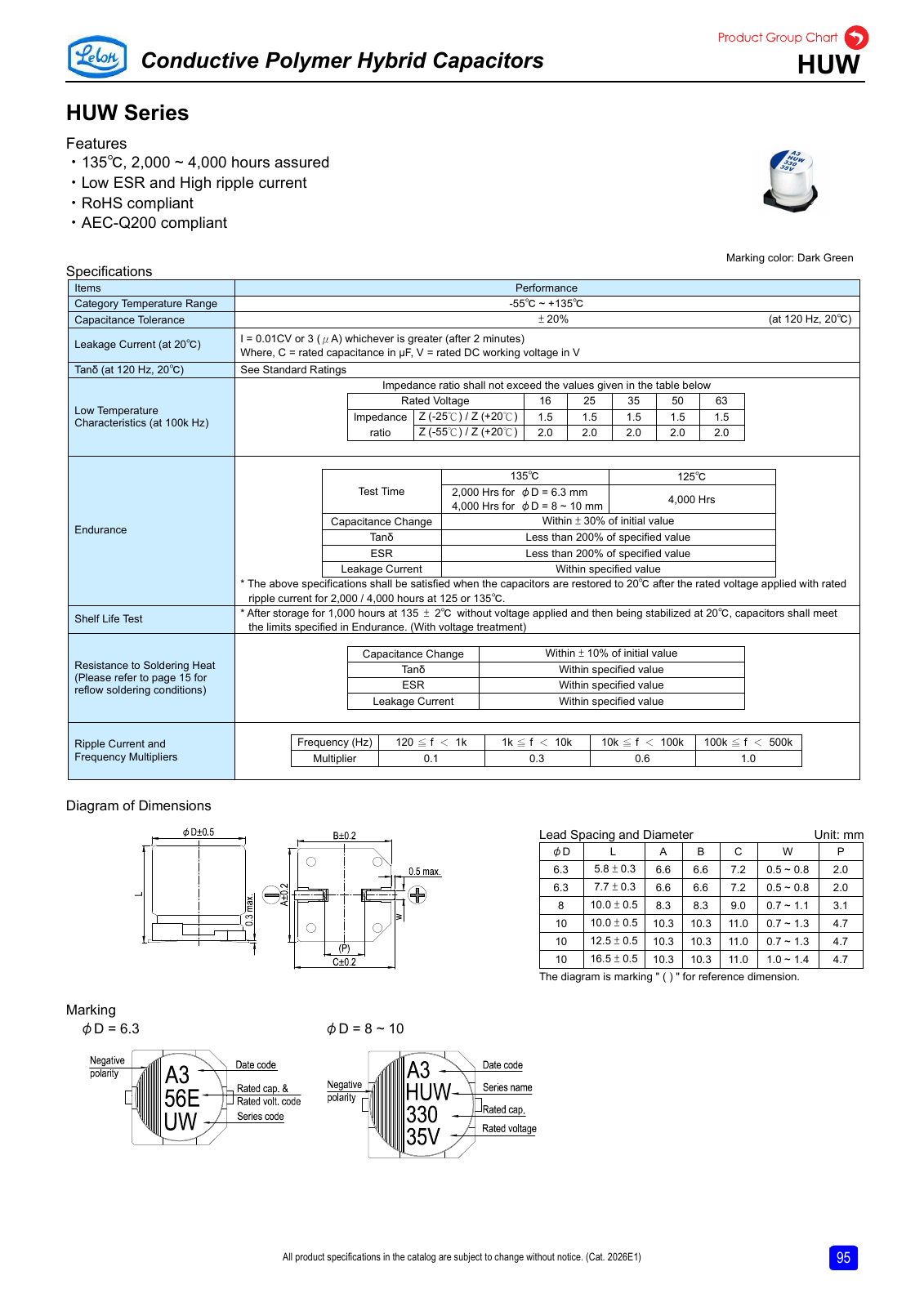
Figure 4. Lelon 2026 HUW catalog information. Endurance duration depends on case diameter; the stated 135°C test includes rated voltage and ripple current.
In this comparison, Lelon offers a useful option for hot, ripple-intensive conditions. AiSHi also offers the shorter 10.5 mm alternative. Neither observation supports a universal vendor ranking: the better fit depends on the actual thermal and mechanical constraints.
4. Other suppliers address different constraints
Man Yue: thin multilayer structures and high-temperature endurance
Man Yue's products include SAMXON wet electrolytics, X-CON solid and hybrid products, and XLPC multilayer polymer solid capacitors.
Two multilayer examples show why series distinctions matter. An MTL 2 V, 220 μF product has a thickness of 0.9 mm. An MBL 2 V or 2.5 V, 470 μF product specifies 3,000 hours at 125°C. These are separate products with different priorities; the thinness of the MTL example must not be combined with the capacitance and endurance of the MBL example.
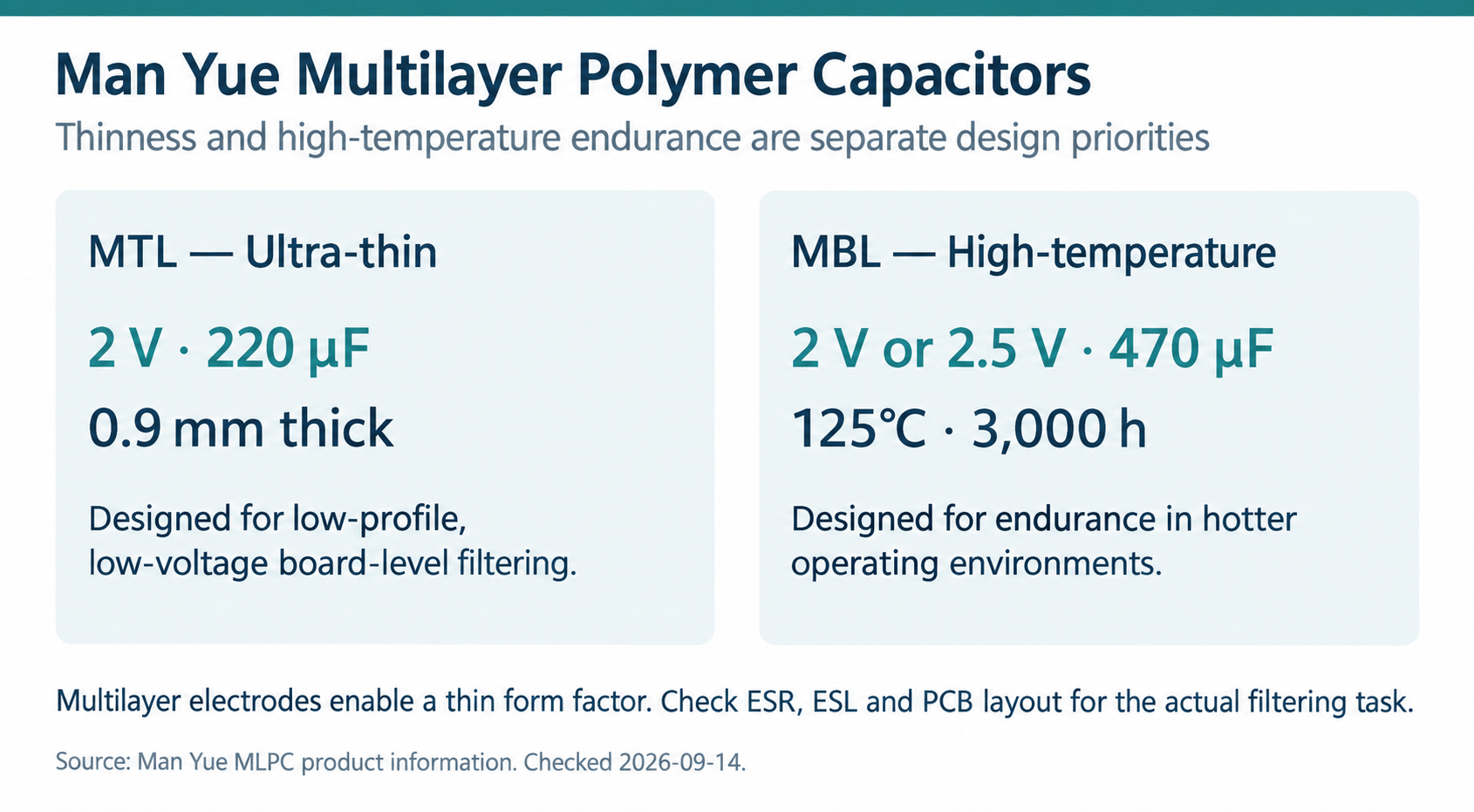
Figure 5. Thinness and high-temperature endurance belong to different series. The figures shown are not simultaneous specifications for a single part.
A multilayer electrode structure enables a form factor beyond the conventional cylinder. Filtering performance still depends on ESR, ESL and board layout. Parasitic inductance becomes particularly important when current changes quickly.
Changzhou Huawei: smaller snap-in packages
Changzhou Huawei Electronics was founded in 1987. Its 2022 revenue was approximately RMB 635 million, compared with RMB 4.522 billion for Jianghai and RMB 3.445 billion for Aihua in the same year. Again, company scale does not determine suitability for a particular design.
Huawei's 2026 XP introduction reports a 20–30% volume reduction relative to its own UP series at equivalent electrical performance. This is a within-vendor product comparison. It is not a cross-brand size ranking, nor does the announcement alone establish a specific manufacturing mechanism behind the reduction.
YMIN: a slender outline for constrained installations
A YMIN LKF server-input example provides 180 μF in a 16 mm diameter × 60 mm length case. That long, narrow outline may suit a particular mounting arrangement. It is not automatically space-saving in every direction: the assembly still needs room for its 60 mm length.
APAQ: compact end terminations and low ESL
APAQ's SMLC approach uses end terminations to reduce ESL. The ASAB100S330E80 example is rated 10 V, 33 μF, measures 3.5 × 2.8 × 1.9 mm, and has maximum ESR of 80 mΩ.
This is a compact board-level filtering component, not a substitute for high-voltage bulk energy storage. The July 2026 datasheet specifies 2 A ripple at 100 kHz and 45°C. Applying the listed 0.5 derating factor at 105°C reduces that allowance to 1 A.
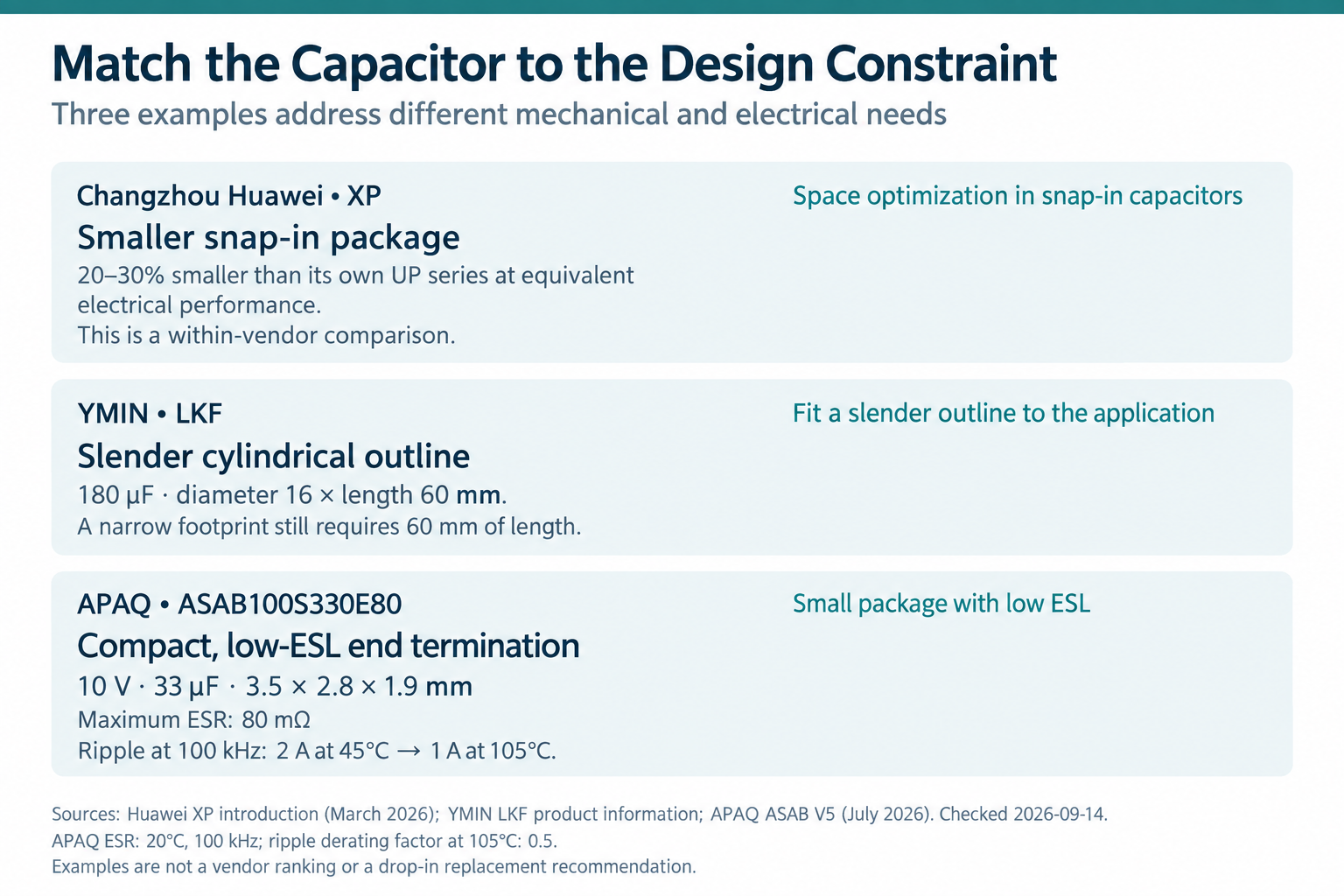
Figure 6. Three distinct product-design priorities. Huawei's volume comparison uses its own UP series as the reference. APAQ's ripple rating must be derated with temperature; its ESR condition is 20°C and 100 kHz.
Conclusion
The useful differences between suppliers appear when the requirements are made explicit. Jianghai's high-voltage bulk products combine electrode-foil capabilities with high-current structures. AiSHi offers lifetime and dimensional choices, including a clear height-versus-ESR tradeoff. Lelon provides high-temperature hybrid options with temperature-dependent ripple ratings.
Man Yue's multilayer products, Huawei's smaller snap-in packages, YMIN's slender outlines and APAQ's low-ESL terminations solve other constraints. Start with voltage, capacitance, ripple spectrum, temperature, mounting space and required service life, then compare products under their stated conditions.
This article is based on public financial reports, catalogs and technical documentation checked as of September 14, 2026. The comparisons use published specifications, not matched laboratory measurements or verified drop-in substitutions. Confirm the applicable specifications with the supplier and validate the selected part in the actual design.