CXMT's 24Gb LPDDR5X adds a Chinese option for mobile memory
On September 20, 2026, Chinese DRAM supplier CXMT announced mass production on its fifth-generation G5 technology platform and displayed two 24Gb LPDDR5X products in 496-ball and 245-ball packages. The products target mid-range to high-end smartphones and portable consumer electronics.
For device manufacturers assessing memory suppliers, the announcement adds a high-density Chinese option. Comparisons with Micron, Samsung and SK hynix show what CXMT has disclosed so far, and which specifications and customer milestones still matter before a device maker can adopt the products.
Density and package design are separate decisions
The lowercase b in 24Gb means bits. 24Gb equals 3GB, not the 24GB of system memory sometimes advertised for a smartphone. Four 24Gb units total 96Gb, or 12GB, as capacity arithmetic. A real implementation also depends on stacking, bus width and the configurations supported by the processor.
Higher density creates more design options, while the finished device's memory capacity remains a system-level choice.
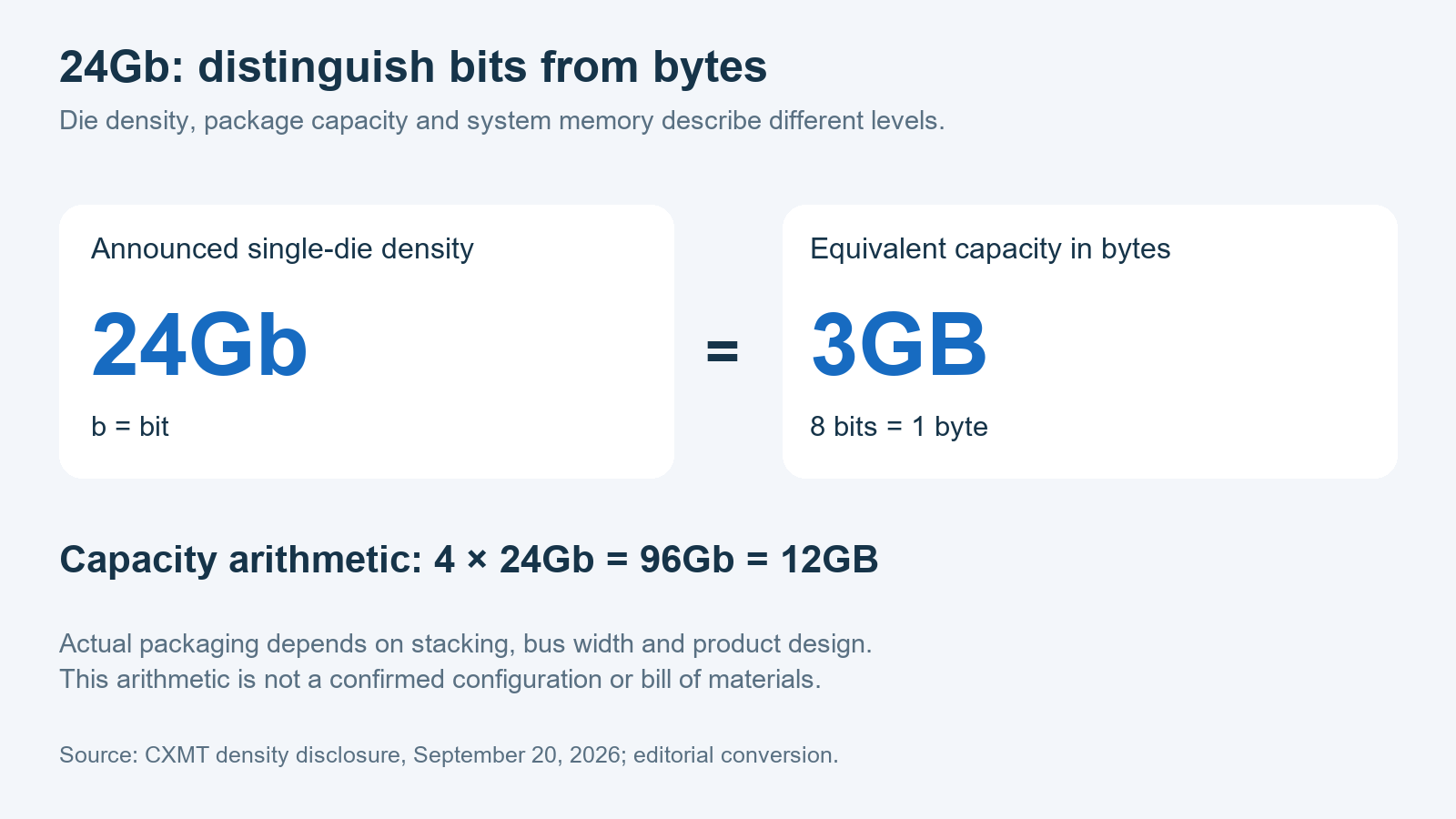
Figure 1. Capacity conversion only. The four-unit example is not a confirmed product configuration or bill of materials.
The two package options also deserve attention. Smartphone boards have limited space, and the memory must fit both the physical layout and the processor interface. A 496-ball option and a 245-ball option give designers different arrangements to evaluate alongside density.
CXMT attributes the density development to progress on G5. It reports an active-area half-pitch of 11.95 nm and at least 50% more dies per wafer than its fourth-generation platform. That comparison is normalized to an 8Gb die basis. It describes a process comparison; actual output and cost for the new 24Gb products depend on their design and manufacturing yield.
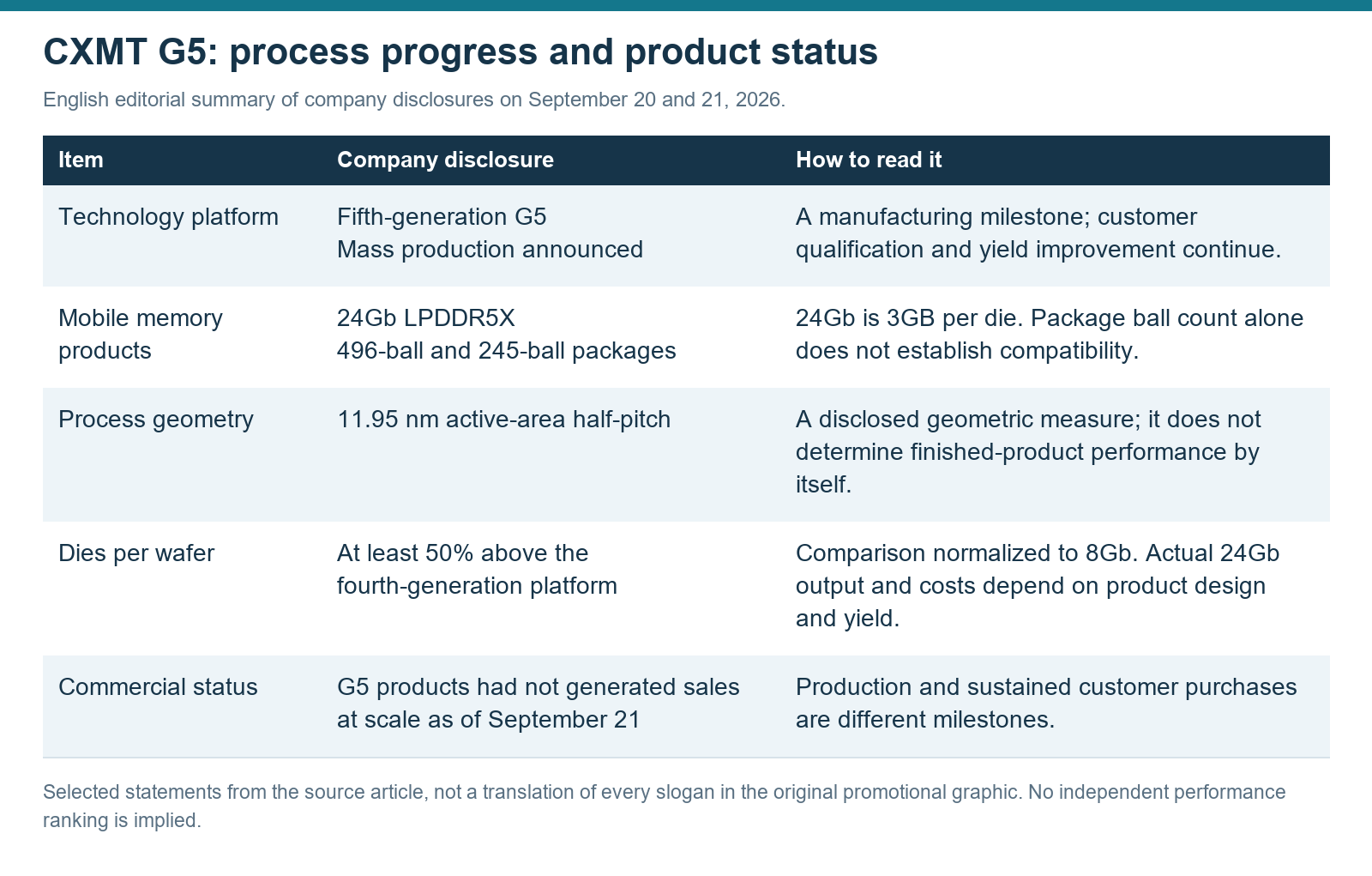
Figure 2. English editorial summary of CXMT's September 20 G5 announcement, corresponding to the Chinese source graphic. Process figures are company disclosures; the dies-per-wafer comparison uses an 8Gb normalized basis. The September 21 commercial-status qualification is also shown.
Micron provides a comparison in speed and packaging
Micron's July update for its 1γ non-binary LPDDR5X family lists 6GB, 12GB and 24GB capacity options and rates up to 10.7Gbps. Those GB options describe a different product level from CXMT's single-die 24Gb disclosure. They should not be placed in one column as equivalent density figures.
The package comparison is more direct. Micron lists 496-ball PoP and 245-ball FBGA for mobile devices, as well as 563-ball and 315-ball packages for client PCs. CXMT's two announced ball counts also appear among Micron's mobile options, placing the new products in established application categories. Matching ball counts do not establish interchangeability: pin assignments, timing and electrical conditions still need to match the intended platform.
CXMT has disclosed high-density LPDDR5X and two package choices. The material reviewed for this article does not provide the specific speeds, power figures or full capacity combinations of these two new products. Comparing their speed and efficiency with Micron would require specifications and measurements under equivalent conditions.
Micron's new family has its own introduction process. The company says samples have reached ecosystem partners and major customers, with validation and qualification under way. Existing supplier relationships help a new product enter evaluation, but a new capacity or package still needs its own tests before use in a particular device.
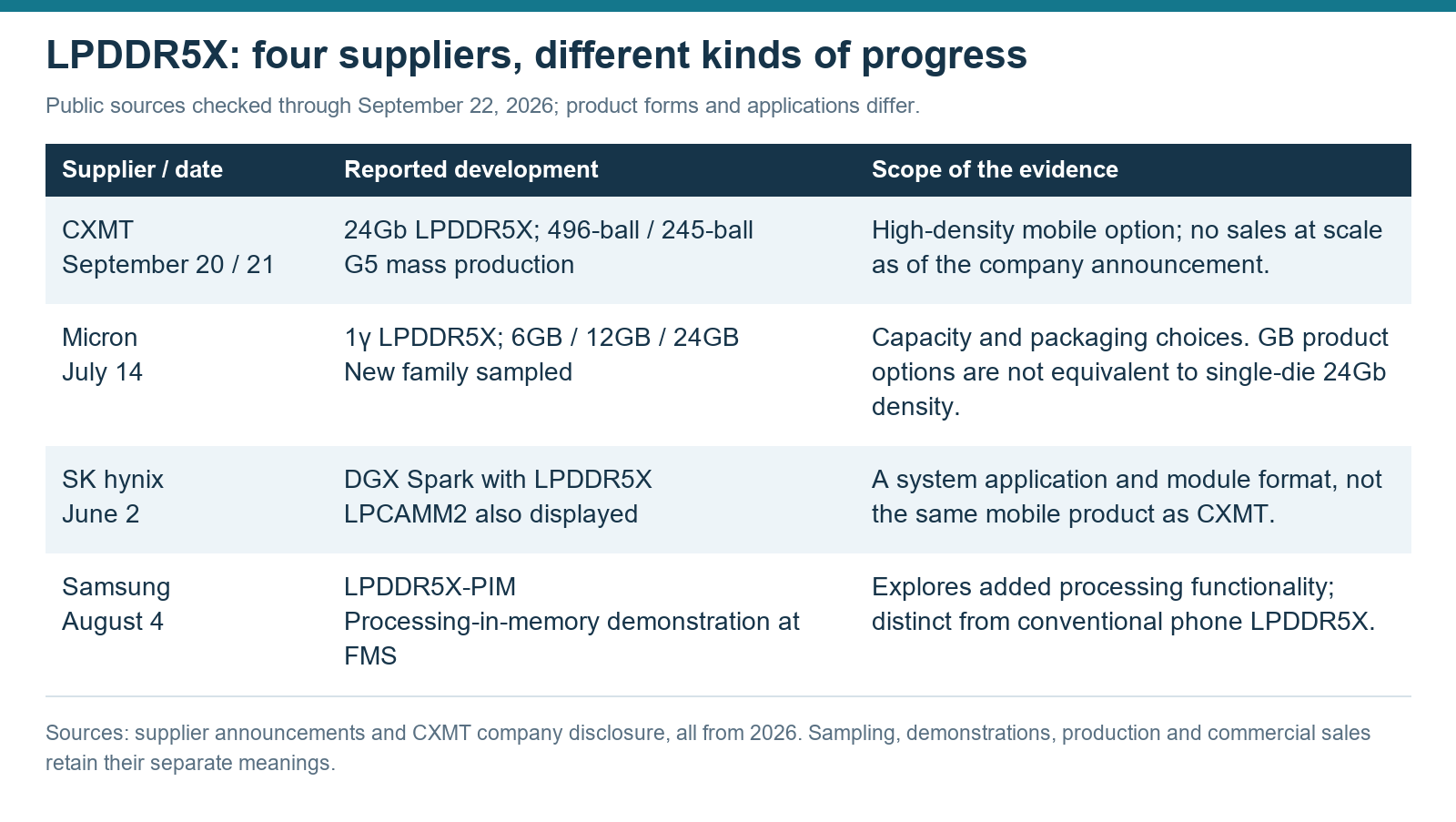
Figure 3. Recent public developments and what they establish. The products and demonstrations differ in form and application, so the table is not a performance ranking. Sources were checked through September 22, 2026.
Other suppliers are extending LPDDR5X beyond phones
At COMPUTEX in June, SK hynix displayed NVIDIA DGX Spark using its LPDDR5X, alongside an LPCAMM2 module based on LPDDR5X. These exhibits show how the technology can support a specific system or a modular memory format outside the smartphone market.
Stable operation in a device requires packaging, thermal design and platform integration. The DGX Spark exhibit provides a concrete system example, although its application differs from CXMT's mobile products and does not establish a like-for-like replacement opportunity.
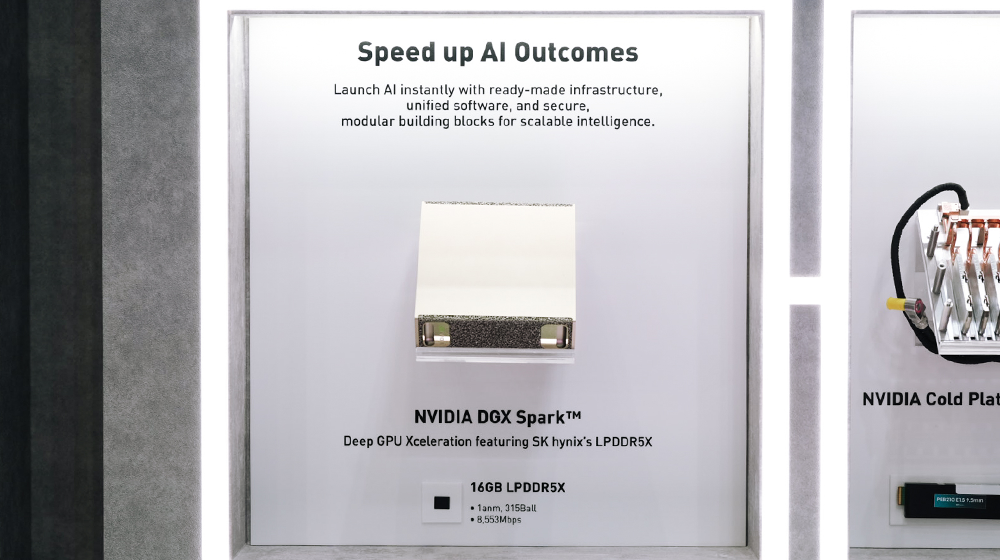
Figure 4. SK hynix's official COMPUTEX 2026 exhibit photograph showing DGX Spark and LPDDR5X. It illustrates a system application, not a direct substitute for CXMT's announced mobile products. Original exhibit labels are retained.
Samsung's LPDDR5X-PIM demonstration at FMS in August explores a different extension: performing some data processing within memory. Samsung describes the approach as a way to reduce data movement and its energy cost. This was a technology demonstration, not a disclosure that ordinary smartphones widely use the function.
The suppliers are advancing different parts of the product offering. Micron is expanding capacity and package combinations. SK hynix provides a system-use example, while Samsung is exploring added processing functionality. CXMT's announcement concerns high-density mobile products and the manufacturing process behind them. Its next competitive task is to fit those products into more platforms and demonstrate their performance in customer devices.
Production must lead to customer adoption
CXMT's September 21 company announcement sets the commercial stage more precisely: as of that disclosure, mass-produced products based on G5 had not yet generated sales at scale. Yield still needed to improve, and entry into customer supply chains required validation and qualification.
Factory production and sustained purchases by smartphone manufacturers are different milestones. The supplier needs to increase output of conforming products. Customers need to establish performance and reliability and coordinate adoption with their launch schedules. These tasks continue after the initial production announcement.
An additional high-density Chinese supplier gives device makers another source to evaluate. Platform compatibility, adoption in end products and dependable supply would turn that option into recurring orders. Any effect on a handset's cost also depends on purchase prices and the final memory configuration.
The next evidence to follow is therefore concrete: which devices use CXMT's new memory, whether supply continues consistently, and how it performs in those systems.