
Aluminum electrolytic capacitors: wet, polymer and hybrid products from 14 suppliers
A charger, an industrial control board and a server power supply may all use aluminum electrolytic capacitors, but they put different demands on them. Packages range from radial cans and small surface-mount devices to flat multilayer parts, with circuit positions extending from a high-voltage DC bus to a low-voltage output.
For sourcing teams reviewing suppliers in mainland China, Hong Kong and Taiwan, a broad capacitor catalog is only a starting point. Some manufacturers emphasize smaller high-voltage parts, others lower equivalent series resistance (ESR), hybrid electrolytes or thinner multilayer construction. The 14 suppliers discussed here illustrate those differences through documented product families and specific ratings.
1. Separate the electrolyte system from the package
The dielectric in an aluminum electrolytic capacitor is an oxide film on aluminum. Wet, solid-polymer and hybrid types differ primarily in the conductive material system contacting that film on the cathode side.
Wet aluminum electrolytics use a liquid electrolyte. Their range extends from small control-circuit filters to high-voltage, high-capacitance energy storage. Radial, surface-mount, snap-in and screw-terminal forms serve power inputs, DC buses and industrial equipment.
Solid-polymer aluminum electrolytics use a conductive polymer. Low ESR is a common advantage for low-voltage output filtering and applications requiring substantial ripple-current capability. Alongside cylindrical packages, multilayer products address restricted mounting height.
Hybrid types combine a conductive polymer with liquid electrolyte. Development balances impedance, voltage, leakage, temperature and endurance for applications including automotive electronics, communications equipment and power-supply outputs.
Package names and electrolyte types describe different aspects of a part. Surface-mount, radial and snap-in describe construction or mounting; wet, polymer and hybrid describe the internal material system. MLPC generally refers to multilayer polymer aluminum electrolytic capacitors, a different product class from multilayer ceramic capacitors, or MLCCs. HEC's laminated electrode foil, discussed below, is a separate electrode-material development.
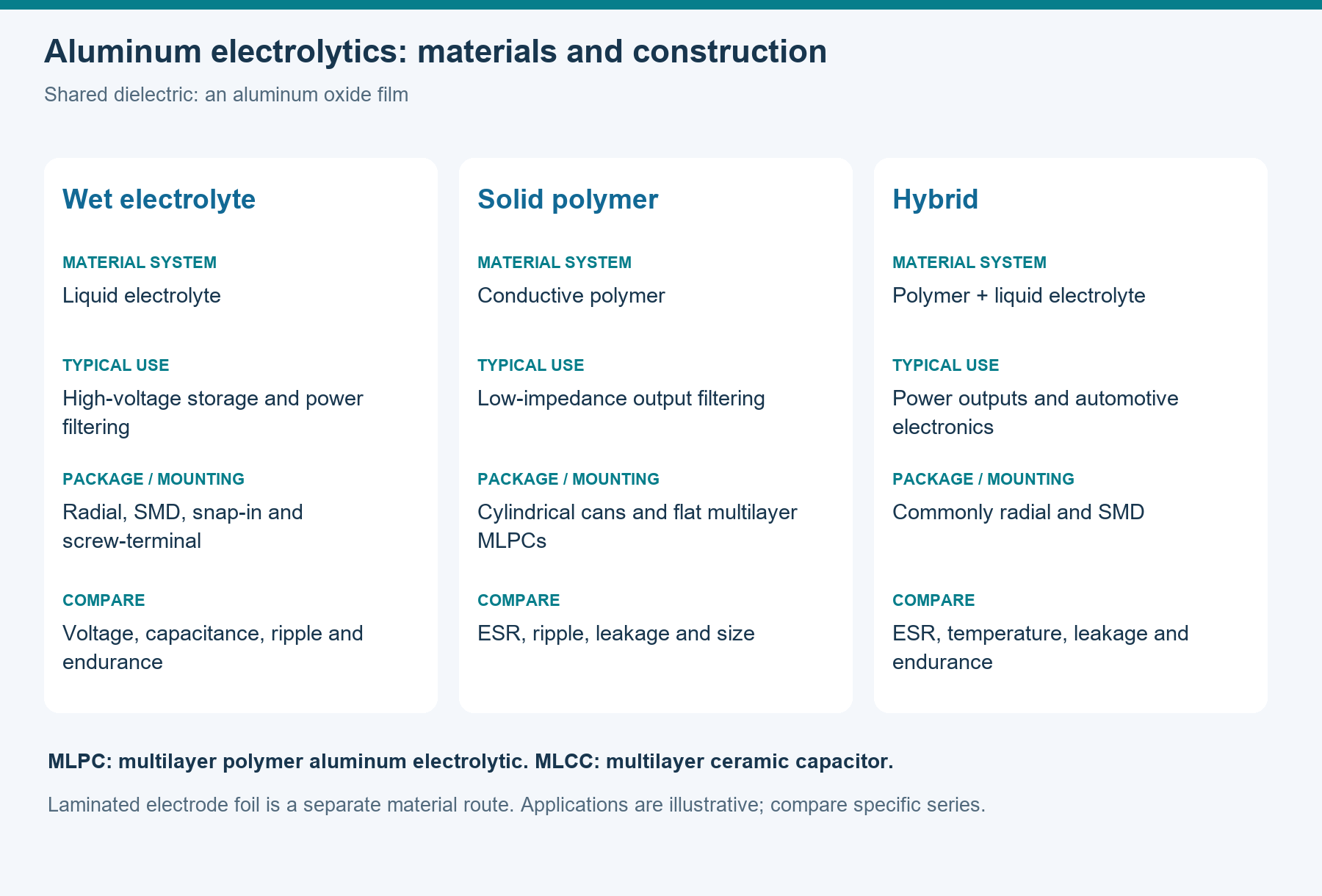
Figure 1. Relationships among wet, solid-polymer and hybrid aluminum electrolytics. Application examples illustrate their roles; performance depends on the series and rating.
2. Wet electrolytics span high-voltage storage and small control-circuit filters
Aihua: compact snap-in parts alongside hybrid and multilayer development
Aihua's July 2026 KT-series preview describes compact snap-in aluminum electrolytics for AI servers, HVDC and UPS applications. These power supplies need high-voltage energy storage and filtering within increasingly constrained space.
The disclosed KT status is a new-product preview. Aihua's half-year report published in August also discusses hybrid and multilayer aluminum electrolytic development. Engineers can assess the high-voltage snap-in route separately from products aimed at other positions in a power supply.
Jianghai: snap-in, hybrid and MLPC product routes
Jianghai's April and June 2026 investor-relations records discuss server-related snap-in applications and progress in polymer hybrid and MLPC products. Both large-capacitance electrolytics and compact polymer parts appear in these disclosures.
The CD29H snap-in family on Jianghai's European website gives a specific example. Its v2026.2 datasheet lists 200 V to 450 V and 47 μF to 2,200 μF, emphasizing high ripple-current capability, compact dimensions and long life for industrial power supplies and inverters. These are family ranges; the part table defines the available voltage-capacitance combinations.
Snap-in parts address bulk storage and filtering, while MLPCs emphasize impedance, height and board area. The two routes serve different positions within a power supply.
HEC: electrode foil and finished capacitors
HEC, known in Chinese as Dongyangguang, listed radial, solder-pin, solder-lug, surface-mount and screw-terminal wet products in its annual-report summary published in April 2026. Its solid products include radial and surface-mount forms.
The company also links electrode-foil production with finished capacitors. It reported development and production progress in laminated foil and capacitors using that foil, emphasizing high specific capacitance and compact high-voltage designs, and stated that the relevant lines had made volume shipments. Laminated foil concerns the electrode material; MLPC describes capacitor construction. The finished series remains the appropriate unit for checking dimensions, capacitance and reliability.
Changzhou Huawei: the XP series reduces snap-in volume
Huawei introduced its XP series in March 2026 as an upgrade to its own UP family. The manufacturer states a 20% to 30% volume reduction at equivalent electrical performance, aimed at space constraints in industrial drives and server equipment. The comparison is with Huawei's UP products.
Huawei also offers radial, surface-mount, solid and hybrid lines. An automation upgrade announced in April addresses manufacturing consistency and ripple-current capability. For designers, the practical question is how a smaller high-voltage can fits the required capacitance into the available layout.
Headcon: wet products remain the base of a broader range
Huajin Capital's May 2026 investor-relations record describes Headcon's coverage of consumer electronics, new energy and automotive electronics. Wet capacitors are the main product type, supplemented by solid and hybrid products, with increasing investment in snap-in equipment and markets.
Headcon's website categories include surface-mount, radial, polymer and hybrid parts. It mainly relies on external suppliers for electrode foil, putting the emphasis on finished-capacitor manufacturing and product development. That organization differs from HEC's integrated foil-and-capacitor operations.
Nantong Sancon: fast-charging series and industrial mounting formats
Sancon's current product information lists the FA and FT fast-charging series for 105°C and 125°C conditions respectively, with an emphasis on compact high-voltage parts and charger filtering. Its range also includes surface-mount, radial, snap-in, screw-terminal and solid-polymer aluminum capacitors.
Compact chargers and industrial supplies impose different requirements for capacitance, installation space and terminals. The catalog provides separate product routes for those needs.
Acon: low impedance and long life for power applications
Acon's DKL series emphasizes low impedance, high ripple-current capability and long life for communications equipment, switching power supplies and industrial instruments. AVY is a long-life surface-mount aluminum electrolytic family. The company also lists snap-in, screw-terminal and radial products.
Series-level differences in impedance, endurance and package format are more useful for selection than a single overall capacitance range.
Chengxing: a documented role in a charging connector's control circuitry
ChargerLAB's June 2026 teardown of the BYD BYS250CN-16WH-01 AC charging connector identifies Chengxing electrolytics rated at 16 V, 47 μF and 16 V, 220 μF for internal circuit filtering.
Small wet capacitors remain common parts of control and power boards. Here the evidence is a component observation in a particular device's internal circuitry. Any automotive qualification claim would need the corresponding part documentation. Mounting space, operating temperature, filtering requirements and continued supply determine the value of these parts in a design.
These examples show the range of wet-electrolytic applications, from bulk high-voltage storage to small control-circuit filters. Mounting form follows the available space, current demands and assembly method.
3. Polymer products target lower impedance and thinner assemblies
Beryl: a part number makes the comparison measurable
Beryl's BC-series specification dated May 13, 2026 identifies PBC025M102G120RR5B as a 25 V, 1,000 μF conductive-polymer aluminum electrolytic capacitor with nominal dimensions of 10 mm diameter by 12 mm length.
Its electrical conditions make comparison more useful: maximum ESR is 16 mΩ at 100 kHz and 20°C; ripple current is 5,300 mA rms at 100 kHz and 105°C. A sourcing table can compare that part with alternatives of the same voltage and size under matching test conditions.
An August 2026 ChargerLAB teardown of EcoFlow's RAPID Pro 67 W three-in-one power bank also identifies Beryl wet capacitors rated at 400 V, 27 μF and 400 V, 39 μF, plus a 25 V, 560 μF CH-series solid capacitor. Wet and solid parts can coexist in one device, serving high-voltage and output-filtering positions.
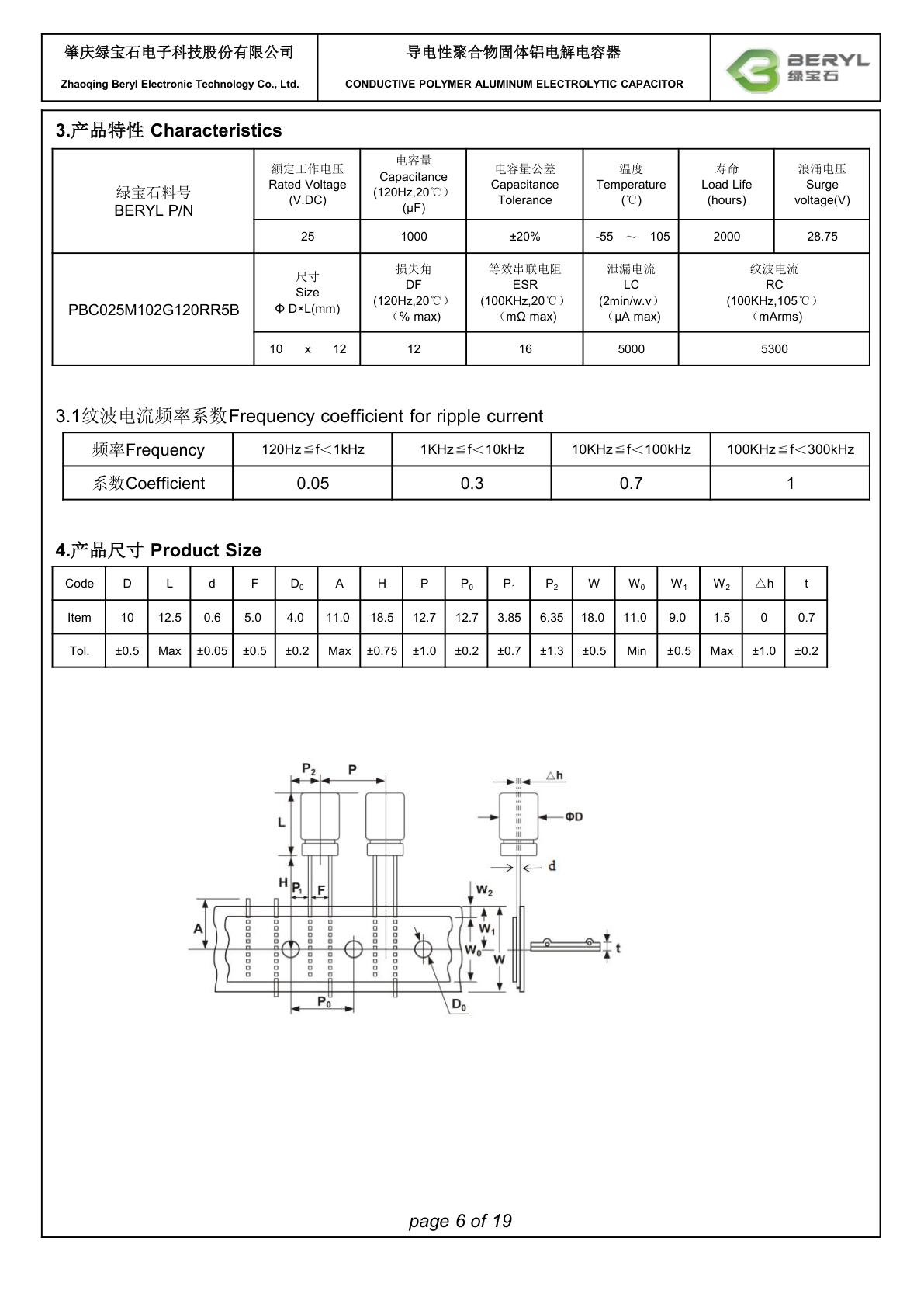
Figure 2. Page 6 of Beryl's May 2026 specification, retained in its original bilingual form with English parameter labels. The nominal body size is 10 mm by 12 mm; layout work must also account for the drawing's maximum height and other tolerances.
Yunxing: a disclosed polymer-capacitor direction for AI equipment
Information published by Fujian's industry and information technology authority in June 2026 included Yunxing's compact, low-ESR polymer solid aluminum capacitor for AI equipment in the province's third electronic-information new-product list. The description emphasizes compact size, high specific capacitance and high ripple-current capability for power supplies in AI servers and robots.
The disclosure did not identify a part number. It establishes a product direction centered on impedance and current capability in compact layouts.
Man Yue: SAMXON and X-CON alongside XLPC multilayer products
Man Yue's interim results published in August 2026 confirm a portfolio of aluminum electrolytics, conductive-polymer products and MLPCs. Its current website lists the SAMXON, X-CON and XLPC brands across conventional electrolytic, polymer and multilayer routes.
The MTL MLPC catalog includes 2 V, 220 μF at 0.9 mm height and 2.5 V, 220 μF at 1.1 mm. The MBL family emphasizes endurance at higher temperature, with catalog conditions of 125°C and 3,000 hours.
These series address different constraints: mounting height in one case, temperature and endurance in the other. Voltage, capacitance, footprint and installation conditions still belong in the same comparison. The current catalog and interim-results dates do not establish when the series were first launched.
CapXon: lower cylindrical packages in both wet and solid forms
CapXon's August 5, 2026 product information shows surface-mount devices with a height of 3.9 mm in wet aluminum electrolytic and solid conductive-polymer versions.
The wet-product image lists 6.3 V to 35 V and 22 μF to 100 μF; the solid group lists 16 V to 25 V and 33 μF to 56 μF. The pictured components carry EV and PM markings respectively. These are group ranges, with actual combinations defined by the part tables.
CapXon's compact cans and Man Yue's thin MLPCs illustrate two ways to reduce assembly height. Their voltage, capacitance and footprint requirements differ, so the electrical comparison must accompany the dimensional one.
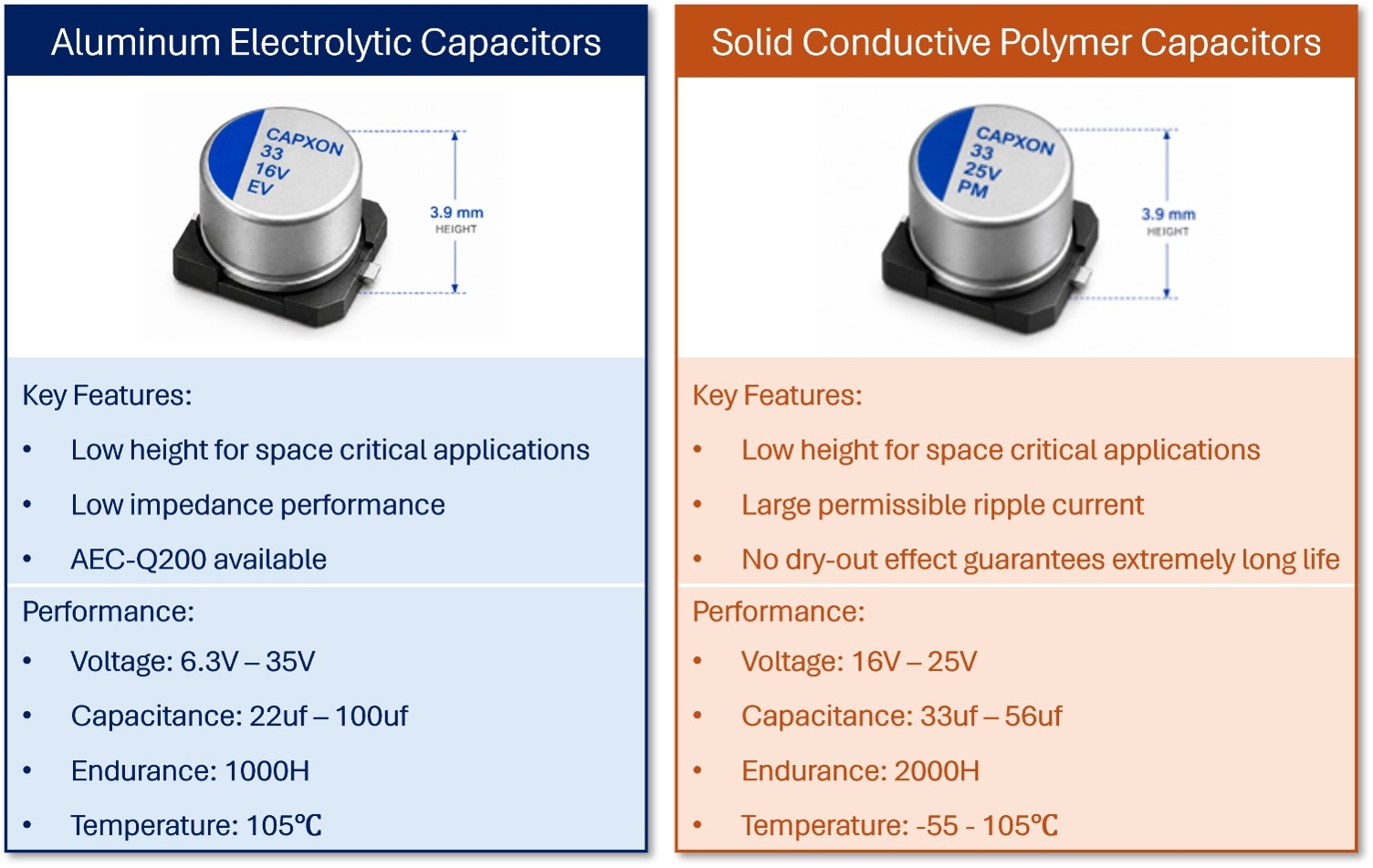
Figure 3. CapXon's original low-profile product image published in August 2026. Wet electrolytics are on the left and solid-polymer products on the right; each set of ranges applies to its own product group.
4. Hybrid products divide by output-filtering and temperature requirements
YMIN: 63 V parts for filtering in 48 V systems
YMIN's July 2026 application information describes NHT and NHX hybrid polymer aluminum electrolytics for output filtering in 48 V systems such as server power supplies. The NHT example is 63 V, 270 μF, with a 10 mm diameter and 16 mm height. The NHX example is 63 V, 470 μF, with the same diameter and a 21 mm height.
With board diameter fixed, designers can compare available height, required capacitance and the number of parallel parts. The 63 V rating must be assessed against maximum bus voltage, transients and project derating rules. ESR, ripple capability, temperature and endurance remain part of the evaluation.
Lelon: separate hybrid series for higher temperature grades
Lelon's product range includes wet, solid and hybrid aluminum electrolytics. Its 2026 catalog lists maximum operating temperatures of 135°C, 145°C and 150°C for the HUW, HUE and HUJ hybrid series respectively, with emphasis on low ESR and high ripple-current capability.
The endurance conditions differ. At 135°C, HUW specifies 2,000 hours for 6.3 mm diameter parts and 4,000 hours for 8 mm to 10 mm parts. HUE specifies 2,000 hours at 145°C; HUJ specifies 1,000 hours at 150°C. The applicable test loading and part conditions must be checked with each series. A higher temperature grade and a longer endurance rating are separate comparison criteria.
Hybrid products also appear in Aihua and Jianghai's recent disclosures. Their role follows circuit requirements: high-voltage positions emphasize storage and capacitance density, low-voltage high-current positions emphasize impedance, while temperature and leakage constraints help determine the electrolyte system.
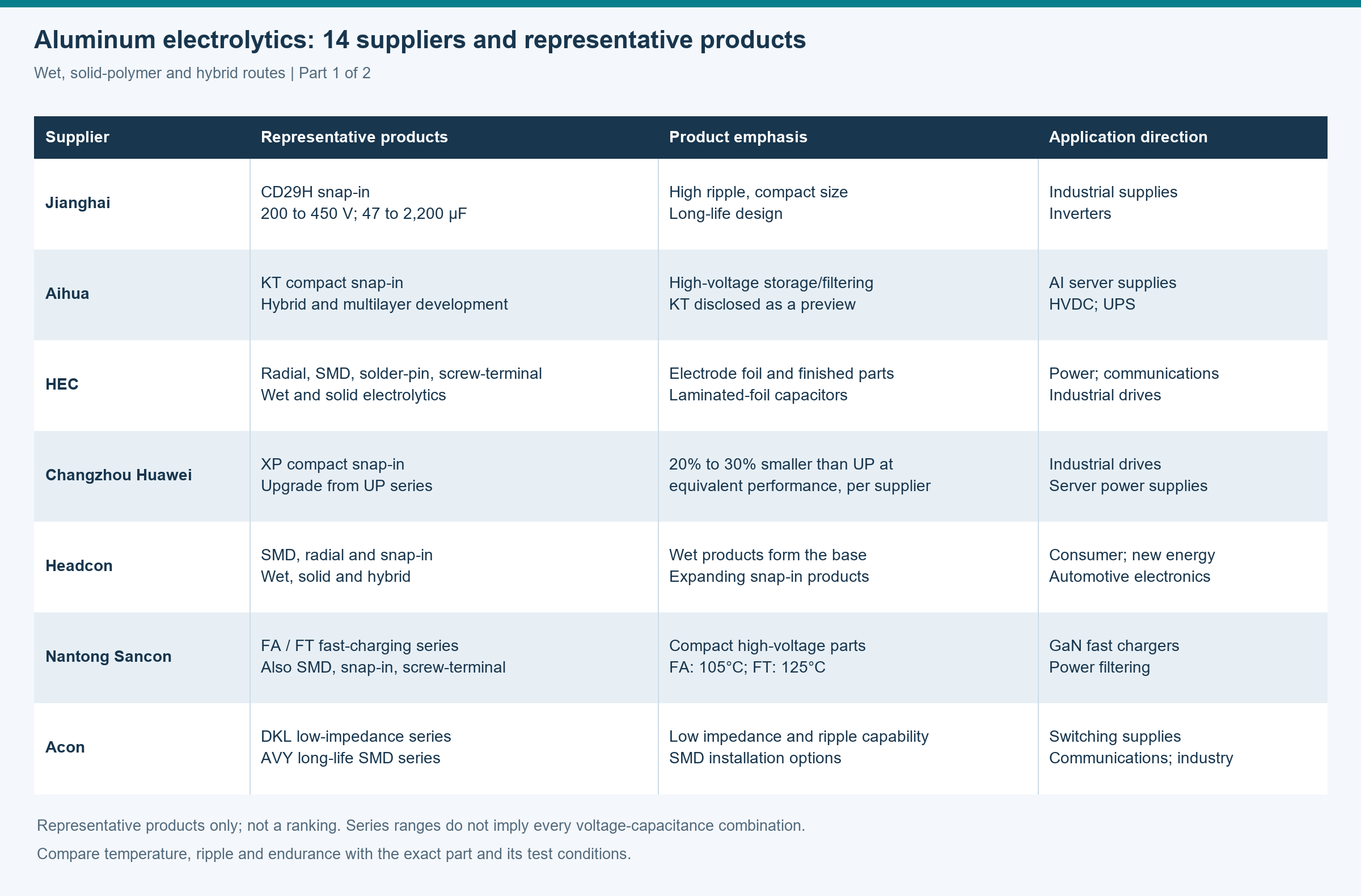
Figure 4. Representative products and applications from Jianghai, Aihua, HEC, Changzhou Huawei, Headcon, Nantong Sancon and Acon. This is a product map, not a size or performance ranking.
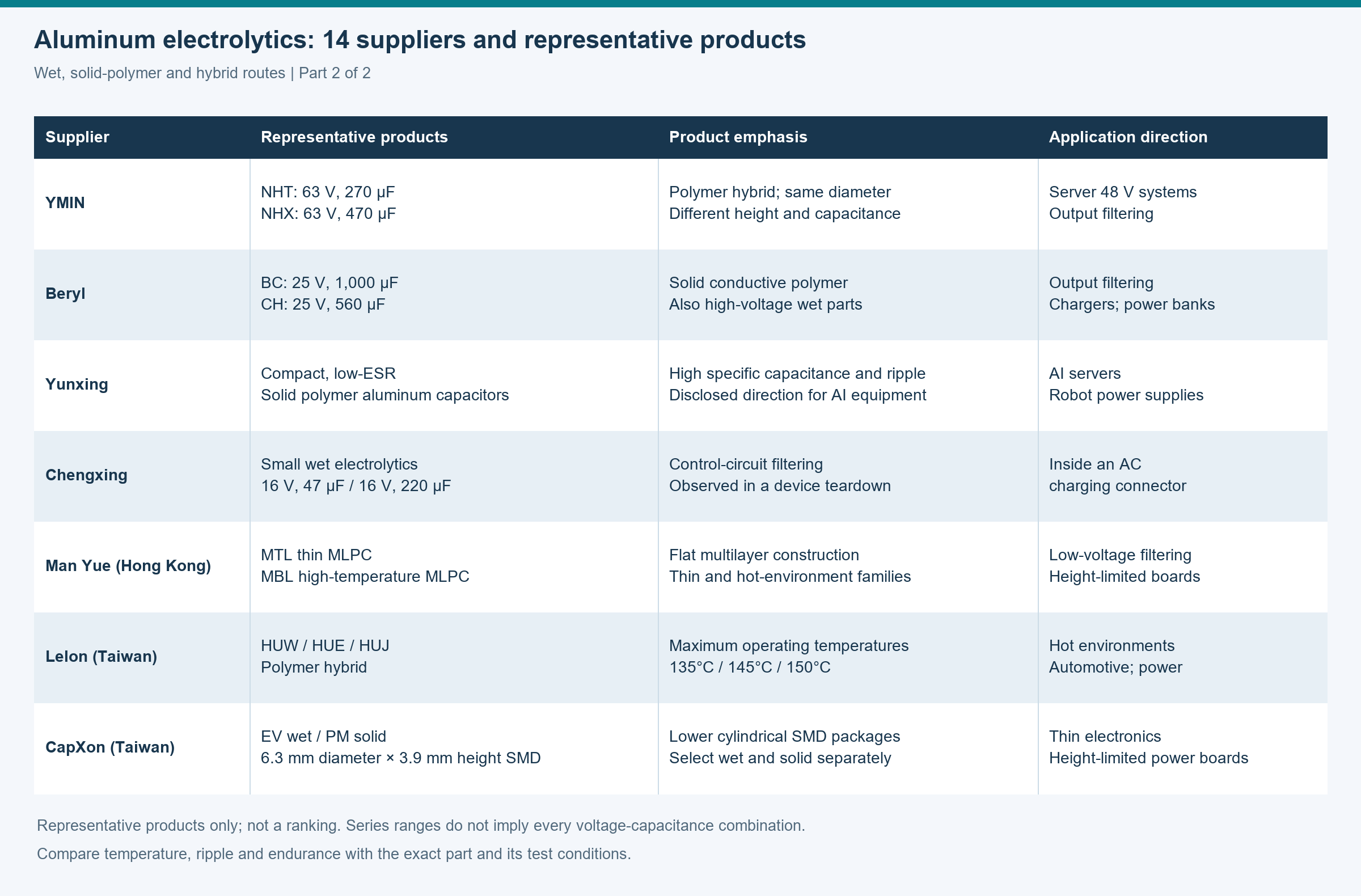
Figure 5. Representative products and applications from YMIN, Beryl, Yunxing, Chengxing, Man Yue, Lelon and CapXon. The chart does not cover every supplier's complete range.
Across the 14 suppliers, development follows several concrete design pressures: reducing the volume of high-voltage snap-in capacitors, lowering polymer impedance, saving height with multilayer and short surface-mount packages, and extending hybrid voltage and temperature options.
The three electrolyte systems can appear in the same equipment. A high-voltage input needs energy storage and filtering; a low-voltage output places more weight on impedance and ripple; a position near a heat source adds temperature and endurance constraints. Beryl's parts in the same teardown show that division of work.
For engineering and procurement teams, this supplier list is a starting point. Identify the circuit position, narrow the voltage, capacitance and mounting dimensions, then compare ESR, ripple current, temperature and endurance under equivalent conditions. That produces a meaningful shortlist for samples, supply confirmation and cost evaluation. The fit ultimately rests with a specific part number.