
Four Routes for Chinese Capacitor Makers Abroad: Exports, OEM Platforms, Local Plants and Design Wins
In the first half of 2026, Faratronic reported roughly RMB 541 million in overseas revenue from its capacitor business. DaliCap reported approximately RMB 94.1 million in export sales, while Viiyong Technology disclosed about RMB 121.2 million in overseas revenue from its principal business. These figures describe different products and sales arrangements. An overseas invoice may be generated long after an engineer has chosen a capacitor for a board, and the place of purchase may differ from the equipment's final market.
For an international buyer, the useful question is where the component enters the decision chain. A capacitor may leave a Chinese factory for an overseas distributor. It may be specified by a global brand, purchased by a contract manufacturer in China, and assembled into a product sold around the world. Its maker may build a plant closer to customers, or win approval from an engineering team overseas. Each route calls for different technical evidence and local support.

Figure 1 | Four routes organized by the point of sale or component selection. A company can pursue several routes at once; the diagram does not rank them by difficulty or return.
1. Direct exports start with a shipment and continue with traceable support
Exports are the most visible route in financial reports, although the reported totals often cover different businesses. Fenghua Advanced Technology recorded about RMB 148 million in overseas revenue in the first half of 2026, or 4.23% of its company revenue. Its portfolio includes multilayer ceramic capacitors (MLCCs), aluminum electrolytic capacitors and supercapacitors, but the report does not allocate overseas sales among those categories. Faratronic's RMB 541 million figure comes from the overseas portion of its main capacitor business, approximately 20.3% of that business's revenue. The two percentages have different denominators.
A manufacturer can serve overseas customers directly or through distributors. Direct accounts require the factory to handle engineering questions, quality agreements and field failures. A distributor can hold local inventory and process orders, while the original manufacturer still owns the product specification, change notices and batch records. Aihua Group described both direct exports and distributor channels in its 2026 interim report. That combination gives it more than one route to an overseas purchase order, but each channel needs a clear path back to the factory when a customer raises a technical issue.
Sales-channel statistics also need their own labels. Viiyong reported that direct sales represented 64.32% of its principal-business revenue in the first half of 2026 and distribution 35.68%. Those are companywide sales-mode figures; they are not a breakdown of the firm's overseas revenue. A distributor purchase becomes more useful to the manufacturer when it can be connected to a project: who recommended the part number, which design center tested it, and which plant consumed the production batches.
MLCC buyers begin with package size, capacitance, rated voltage and temperature characteristic, then check effective capacitance under DC bias and the applicable reliability results. Fenghua's August 2026 product introduction presents medium- and high-voltage, high-capacitance MLCCs in sizes from 0402 through 2225, with grades for automotive and industrial uses. These public specifications help narrow a shortlist. A replacement decision still depends on the data sheet for the exact part number, bias curves, qualification records and lot consistency. Maintaining those documents and product-change notices across regions becomes harder as the catalog grows.
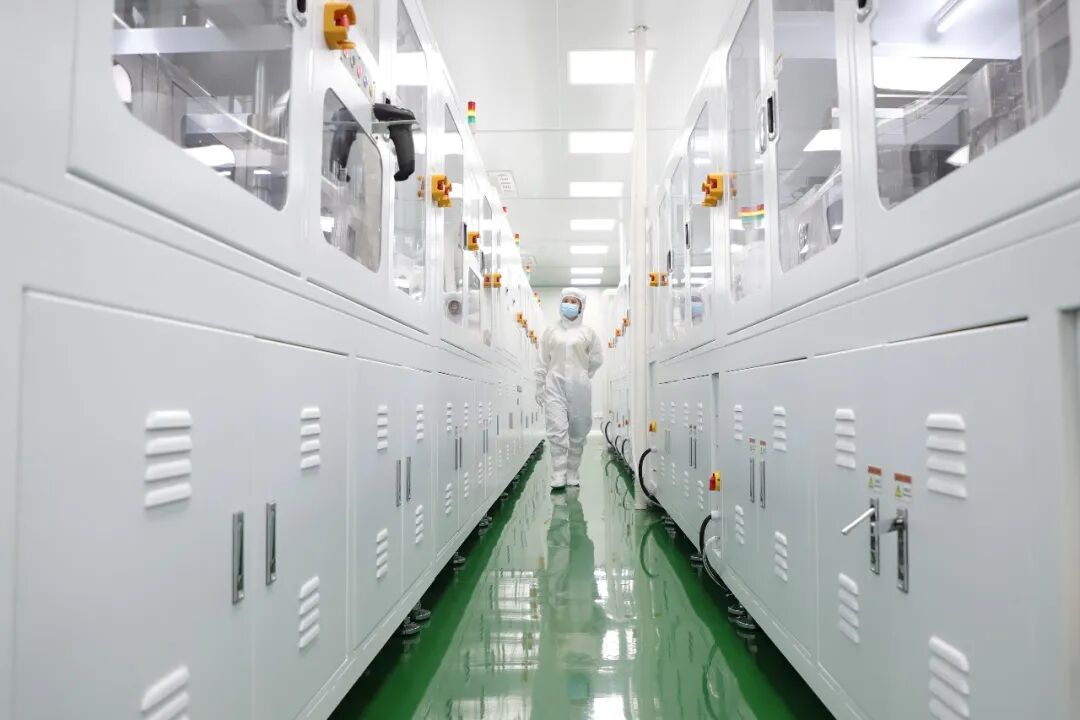
Figure 2 | A production scene published in Fenghua's August 2026 product introduction. The photograph illustrates manufacturing activity; it is not evidence of supply to a specific overseas customer.

Figure 3 | Device images cropped from Fenghua's August 2026 product introduction to show package appearance and size marks. Approval and electrical performance remain specific to each part number.
For aluminum electrolytics, the buying conversation extends to ripple-current rating, operating temperature, lifetime, dimensions and mounting. Aihua and Jianghai offer combinations that include snap-in, screw-terminal, leaded and hybrid products. A local distributor can shorten delivery, but a power-supply customer also needs the manufacturer to answer questions about test conditions and failure analysis. Repeat export orders depend on that routine support as much as on the first shipment.
2. Following an OEM platform begins with the approved BOM
Global equipment programs separate design, purchasing and assembly across countries. A brand may set the platform architecture in Europe or the United States, an engineering group may finalize the circuit board in China, and an original design manufacturer (ODM) may buy parts for a plant that later moves to Southeast Asia. The bill of materials, or BOM, often fixes the component choice before the factory issues a purchase order.
Viiyong's September 2026 revised prospectus gives a view into this chain. It reports about RMB 121.2 million in overseas principal-business revenue for the first half of 2026, equal to 12.06% of that business. The prospectus names customers in consumer-electronics and industrial supply chains, including Hon Hai, ASUS, LCFC and Goertek. It describes deliveries involving bonded zones, Taiwan and Hong Kong. Those sales and delivery locations do not identify every finished product's destination or establish approval at every overseas factory associated with those customers.
For high-capacitance MLCCs, the engineering approval concerns effective capacitance at the intended operating voltage, mechanical stress after board assembly, insulation performance and the spread of results across lots. A matching package and nominal capacitance can get a candidate into testing. A platform revision or factory transfer may then require renewed attention to qualification data, packaging, lot labels and the local quality contact.
Three decisions often occur at separate desks. Engineers assess circuit performance. Purchasing places a part number on an approved supplier list. Production and quality teams accept supply from a specified factory under agreed traceability and change-control rules. Automotive electronics add the requirements of vehicle makers and tier-one suppliers. For a capacitor maker, the durable opportunity is to carry a qualified part across successive production sites while preserving the records that supported the original approval.
3. Overseas manufacturing depends on the project and the plant's stage
Film capacitors are closely tied to the mechanical and thermal design of inverters, energy-storage converters and automotive power electronics. Faratronic identified new-energy vehicles, new-energy applications and data centers among its important markets in its 2026 interim report. In March 2026 it announced a change in location for a planned overseas production line, from Hungary to Malaysia. The proposed Malaysian base for new-energy film capacitors has an investment ceiling of RMB 200 million and an expected construction period of two years. Land acquisition, factory construction, equipment installation and trial production were future steps when the announcement was made.
The location change deserves attention. Faratronic said geopolitical conditions, the investment environment and regional changes had slowed its Hungary project; avoiding international trade barriers was among the stated reasons for choosing Malaysia. The announcement establishes an investment plan and its rationale. The next meaningful evidence will be progress on land and equipment, trial output, customer approval and sustained deliveries from the new site.
Jianghai provides a different point of reference. Its first-half 2026 report discusses the existing production base of its Japanese AIC business and the use of that base to serve overseas markets. The same report calls for stronger exports of high-capacitance snap-in aluminum electrolytics, multilayer polymer capacitors (MLPCs), supercapacitors and solid-liquid hybrid capacitors. The base already exists; the export push is a stated business direction. The report does not give production volumes at the Japanese base for every one of those newer product lines.
A new manufacturing location also creates a fresh qualification workload. Customers will examine material sourcing, equipment, process capability and whether an existing part number needs approval from the additional plant. Film capacitors require continuity in film and metallization processes, encapsulation, temperature rise and lifetime testing. Aluminum electrolytics bring electrolyte, sealing and aging-screening conditions into the review. The difficult work is linking the records from one plant to the next so that a customer can assess what actually changed.
The economics are project specific. A local plant may shorten lead times, yet it adds equipment depreciation, staff and management costs while yield is still improving. Keeping production in China and adding an overseas warehouse or applications team preserves the established manufacturing line. The customer's local-content requirements, expected order volume and ability to approve multiple factories determine which arrangement is viable. Faratronic's Malaysian plan and Jianghai's Japanese base show these options at different stages.
CCTC's 2026 interim report also describes overseas projects and a global service network. A sales team, warehouse, construction project and operating MLCC factory represent separate commitments. Its disclosure supports a discussion of international service capacity, without establishing that a particular overseas MLCC plant is already producing commercial volume.
4. Design wins require engineers to trust a specific component
An overseas design win starts when the customer's engineering team evaluates a component in its own product. DaliCap's radio-frequency and microwave MLCCs and single-layer ceramic capacitors offer a useful case. In RF circuits, Q factor, equivalent series resistance, frequency response and power handling matter alongside nominal capacitance. Samples are tested in a module or finished system before the component becomes a stable design choice.
DaliCap's 2026 interim report groups its RF and microwave MLCC products into chip types, leaded microstrip types and power assemblies. It identifies palladium inner electrodes for the DLC70 series and silver inner electrodes for DLC75. Single-layer ceramic capacitors address higher-frequency applications. Each physical form changes assembly, parasitic behavior and the measurement method. An engineer assessing an alternative needs to know where it sits in the RF chain and what power it will see before comparing electrical results.
The same report says DaliCap maintains long-term relationships with GE Healthcare and Siemens Healthineers and has entered the supply systems of Advanced Energy Industries and MKS Instruments. It describes a direct-sales sequence that includes technical support, samples, customer visits and orders. Export revenue in the first half of 2026 was about RMB 94.1 million, around 38.5% of company revenue. The report does not allocate that total to individual part numbers or customers.
An exhibition can create a conversation; a design win is evidenced by the customer's evaluation and adoption of a defined part. RF buyers also look for batch-to-batch electrical consistency, traceability, engineering-change response and prompt failure analysis. Design responsibility and purchasing authority may sit in different organizations, so an applications engineer needs to know who can approve a substitution and who will own the resulting production order.
DaliCap notes that customers face time and cost when switching a qualified RF supplier. This can protect an established position, while lengthening the work required of a new entrant. An overseas applications engineer can bring the customer's circuit conditions back to the design and manufacturing teams, then help locate the cause of a sample failure or parameter shift. The next platform must still be qualified on its own requirements.
These four capacitor categories call for different entry points. Commodity and high-capacitance MLCCs can seek a defined position in global equipment platforms. Aluminum electrolytics must prove lifetime and dependable supply in power and industrial equipment. Film capacitors are tied closely to power modules and system programs. RF ceramics serve a narrower set of designs where a qualified position may be sticky. Channel stock, local engineering and manufacturing investment should follow the way each customer selects the component.
5. Five evidence stages lead from visibility to repeat revenue
A product catalog, trade-show appearance, sample request, design approval, purchase order and recurring revenue each indicate a different stage. A sample shows that evaluation has started. A design win ties a part to a project. An order shows that a transaction occurred. Repeat revenue suggests that supply continued over time. Public disclosures seldom show every step for every program, so claims about overseas progress should name the stage they establish.

Figure 4 | A conceptual guide to the business stages commonly supported by public evidence. It is not a rating of any company in this article.
Faratronic's overseas capacitor revenue establishes sales, while its Malaysian announcement describes a plant still on the development path. Jianghai has a Japanese manufacturing asset and has stated an ambition to export more new products. Viiyong's place in global equipment supply chains warrants closer study of particular platforms and plant approvals. DaliCap's disclosed customer relationships give a firmer basis for discussing RF design engagement than a trade-show appearance alone, although part-by-part order details remain private.
For a capacitor supplier planning its next market, the first map is organizational: who chooses the part, who purchases it and who owns quality decisions. That map guides the choice of a distributor, a local inventory position, an applications engineer or a manufacturing site. The company that can connect sample data, change control, lot traceability and field response is better placed to turn an initial order into a lasting overseas business.