
Between the Camera and the ADAS Processor: China's Automotive SerDes Progress
Adding cameras to a car does not guarantee that usable images will reach its driver-assistance processor. Between the sensor and the central controller are cables, connectors and a less visible part of the semiconductor supply chain: automotive serializers and deserializers, collectively known as SerDes.
On September 7, 2026, Chinese supplier Rsemi Technology said its automotive high-speed SerDes supports video transmission from the 11 cameras on GAC Aion's N60. The company described cooperation with GAC spanning development, validation and production delivery. For teams following China's automotive semiconductor industry, this provides evidence of vehicle adoption beyond the highly publicized processors that run perception and driving software.

Figure 1. N60 application illustration reproduced from Rsemi's September 7, 2026 announcement, which credits GAC Aion for the image. This is not a chip teardown or a vehicle bill of materials.
A clear image still needs a reliable path to the processor
A serializer converts camera data into a high-speed serial signal suitable for transmission over a cable. At the receiving end, a deserializer recovers the data and passes it toward the processor.
The MIPI CSI-2 interface commonly used around camera modules has a different role from the cable link crossing the vehicle. Higher resolution and frame rates increase the data load. More cameras add requirements for aggregation, synchronization and allocation of processor interfaces.
The difficult conditions appear in the vehicle itself. Cables introduce loss, connectors degrade signals, and temperature changes and electromagnetic interference affect reception. A working bench setup establishes performance under those test conditions. A vehicle program must also examine different harnesses, operating conditions and stages of use.
That explains the attention given to equalization, diagnostics and data-integrity protection in SerDes documentation. The processor's ability to interpret a scene depends on receiving usable data in the first place.
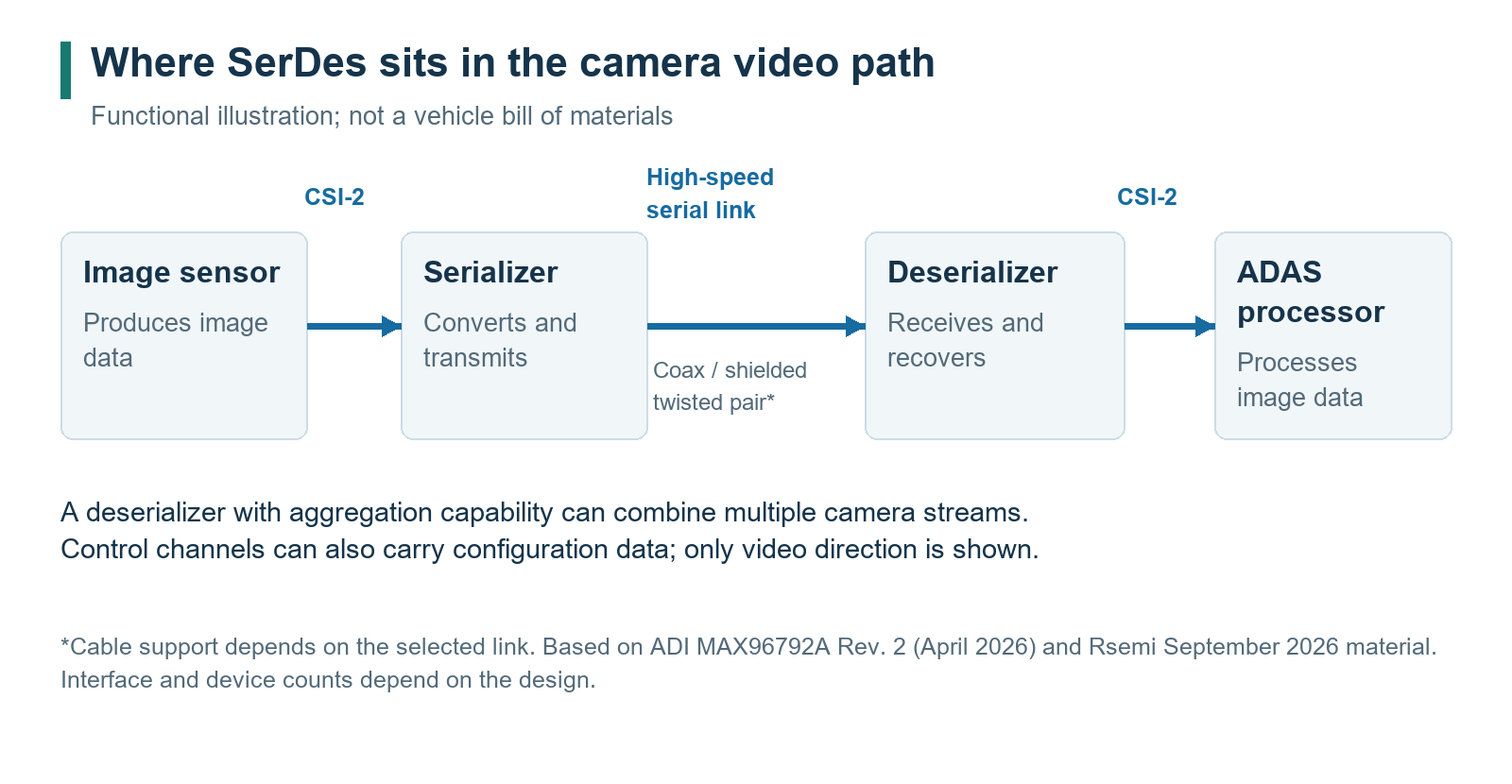
Figure 2. Functional illustration of a camera video link. It explains component roles rather than the actual bill of materials of a particular vehicle. Cable and interface choices depend on the selected system.
Rsemi's integration proposition
Two published R-LinC family capabilities help explain Rsemi's approach: a maximum rate of 16 Gbps per channel and six-in-one camera deserialization. One concerns link bandwidth; the other concerns how multiple cameras are connected to the receiving system.
If every camera requires a separate receiver and a dedicated processor interface, device count, routing and interface resources can become constraints. Bringing multiple receive links into one deserializer gives designers another way to organize those resources.
The possible savings in board area and external circuitry depend on the whole design. Camera combinations, output bandwidth, power, cooling and fault handling all matter. Six-in-one integration does not mean that any six cameras can be connected without bandwidth or configuration limits.
In its September report on a Qualcomm automotive event, Rsemi also reported AEC-Q100 qualification, ASIL-B functional safety certification and link-break detection capabilities. These disclosures extend the discussion from raw bandwidth to automotive reliability and diagnostics.
The family's capabilities must still be separated from the N60's actual implementation. The vehicle announcement does not disclose ordering codes, chip quantities or operating link rates. Eleven cameras cannot be translated into eleven SerDes devices, and the maximum 16 Gbps rating should not be assigned to every link in that vehicle.
ADI and Valens highlight other system choices
International products show why link speed alone is an incomplete comparison.
Analog Devices' MAX96792A is a dual GMSL3/2 deserializer. Its April 2026 datasheet revision specifies a 12 Gbps GMSL3 forward rate, with support for 3 Gbps and 6 Gbps GMSL2 links. Video from two inputs can be aggregated into one CSI-2 output port, and replication is also supported. For an existing GMSL design, support within that technology family may affect how much must change during an upgrade.
Valens Semiconductor uses MIPI A-PHY. In February 2026, Valens and camera-module maker MCNEX announced a VA7000-based QHD front- and rear-view camera solution supporting unshielded twisted pair or low-cost coaxial cable. A separate 4K, 60-frame-per-second solution explicitly uses shielded cabling. These examples connect the imaging requirement to the harness choice.
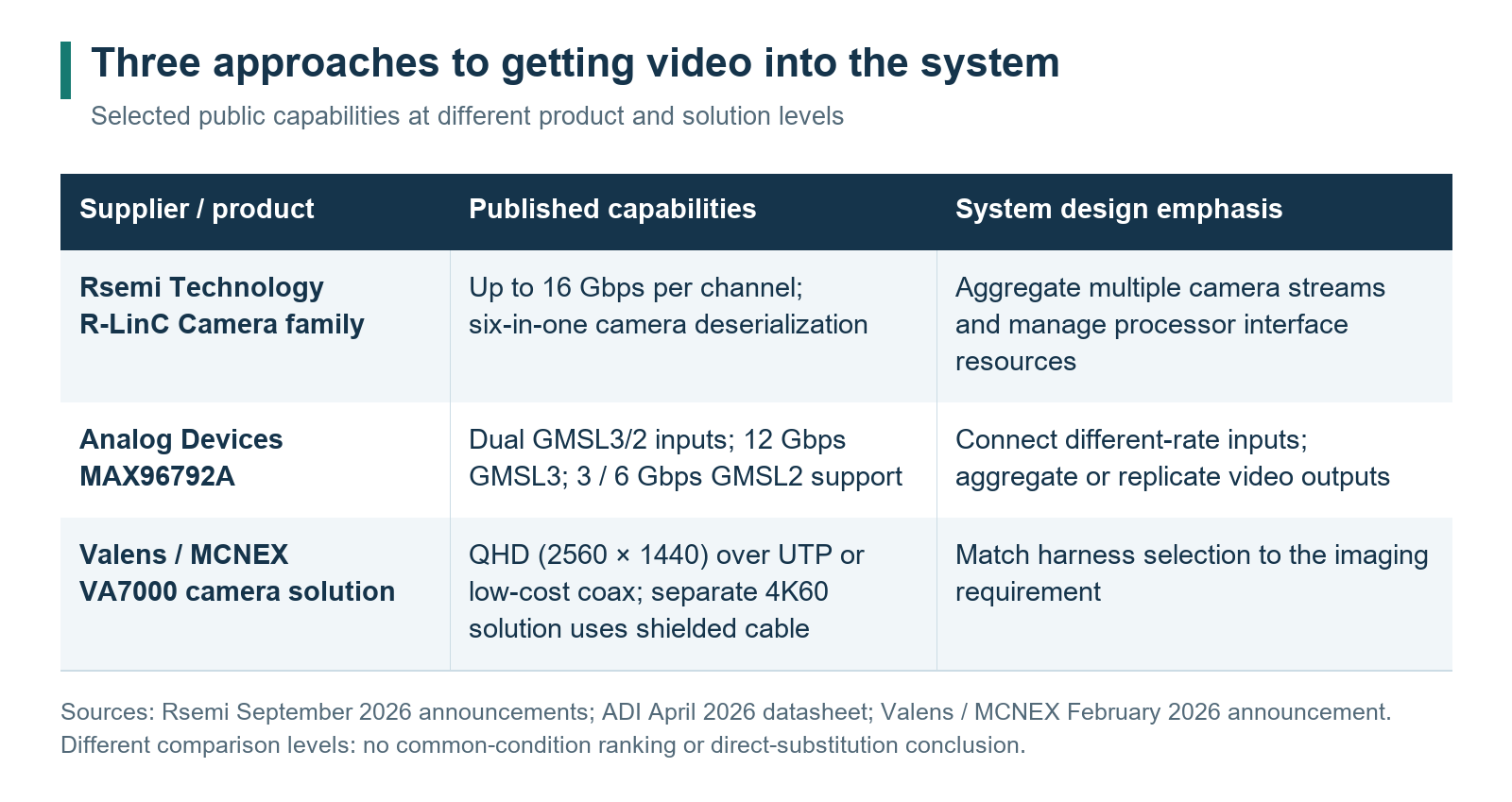
Figure 3. Selected capabilities from the suppliers' public material. A product family, an individual chip and a camera-module solution are different comparison levels; this is neither a common-condition benchmark nor a substitution list.
The difference between 16 Gbps and 12 Gbps is therefore insufficient to rank complete systems. Cable conditions, useful video payload, channel count, power consumption and software integration can change the decision. Two devices exposing CSI-2 toward the processor do not necessarily use compatible protocols on the cable side.
For Rsemi, the practical challenge is to make its link fit a customer's cameras, processor and development tools with manageable integration effort.
Vehicle adoption creates the next set of evidence
Rsemi says R-LinC has been included in the PVL component lists for several Qualcomm automotive SoCs. Together with the N60 announcement, this shows reported progress in processor-platform support and a vehicle application. List inclusion and supply to a vehicle program are separate milestones, each requiring its own evidence.
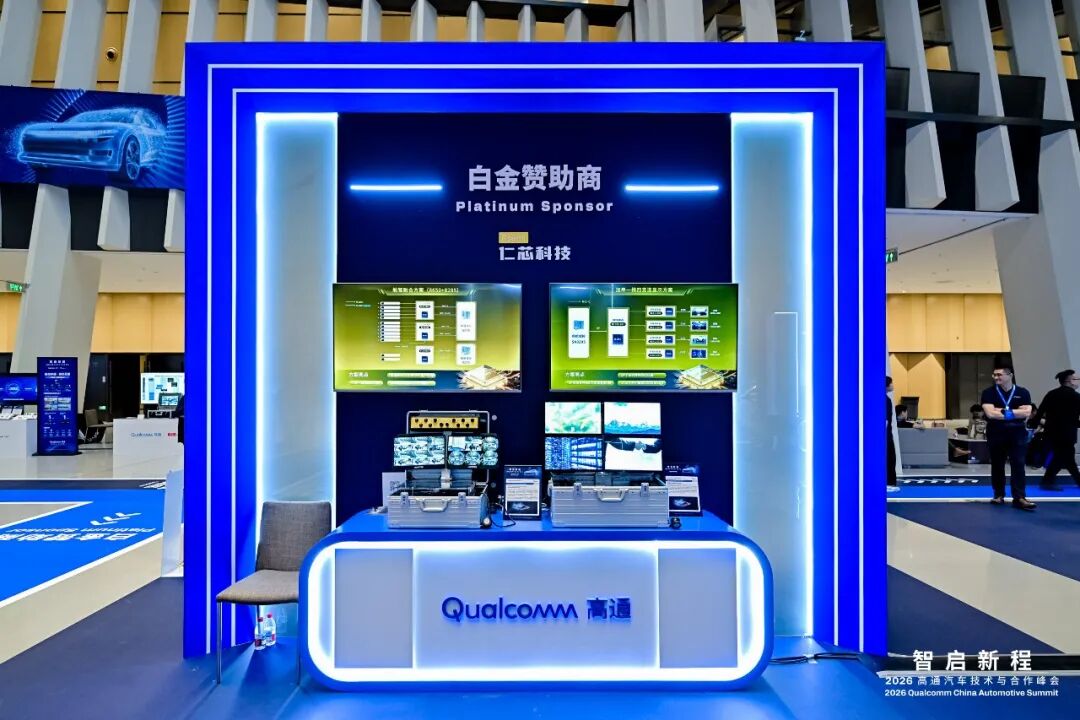
Figure 4. Rsemi's demonstration booth at Qualcomm's June 2026 automotive technology and cooperation summit, published in Rsemi's September 7 announcement. A trade-show demonstration alone is not evidence of volume production. Original event signage is preserved.
The next work is specific: checking stability with a different harness, determining which settings must change for another camera module, locating link faults and maintaining existing functions after software updates. Results need to become part of customer documentation, test tools and support procedures so that a later project can reuse them.
Production adds demands for consistency between batches, continued delivery and timely problem resolution. Engineers and buyers also incur adaptation and validation costs when changing a device. Those costs belong alongside the component price in an evaluation.
Public information does not yet support a comparison of Rsemi's long-term failure rates or full lifecycle costs with those of international suppliers. Its reported vehicle adoption does provide a setting in which operating experience and customer feedback can accumulate.
For global teams tracking Chinese alternatives, that is the progress to watch: a link that is easier to integrate into the next vehicle, faults that are easier to diagnose, and performance that remains reliable over time.
Based on public disclosures, with supplier statements distinguished from engineering analysis. Product comparisons do not establish direct interchangeability.